

Blog RSS

The Pin Factory Blog

"Little else is requisite to carry a state to the highest degree of opulence from the lowest barbarism, but peace, easy taxes, and a tolerable administration of justice" - Adam Smith

A lot of hot air

Written by Tom Clougherty | Tuesday 20 November 2007

On the train this weekend, I was sitting accross the aisle from a lady reading George Monbiot's new book.

Every few minutes, she put the book down and loudly pontificated on global warming. We should all stop flying, of course, and carbon emissions should be set at a world level (!) with everyone given the same individual ration (never mind the economics or enforceability of that one...).

I was sorely tempted to point out the error of her ways, when her husband stepped in and did the job for me. Eager to get on with reading his own book, he said: "You know darling, there would be a lot less carbon dioxide in the atmosphere if people would just shut up!"

Quite.

View comments

A magnificent tribute

Written by Dr Madsen Pirie | Monday 07 July 2008


Adam Smith is finally honoured by a fitting statue in his own country. There were two days of festivities to mark the occasion, starting with Thursday’s debate on The Invisible Hand (which won handsomely). On Friday morning there was a visit to Panmure House, his one-time residence. Adam Smith’s favourite breakfast, strawberries, was served. Then at 12.15 in the Royal Mile in front of St Giles Cathedral, Nobel Laureate Vernon Lomax Smith said the words and pulled off the cover to reveal Alexander Stoddart’s astonishing tribute to the great man himself.

He stares down Edinburgh’s High Street, his stern expression reminding onlookers of the virtues of free markets and free societies. The statue itself, 10 foot high on a 10 foot base, took over three years to organize and complete, and was funded by private donations and organized by the Adam Smith Institute. A piper played some of the guests into a lunch in City Chambers, and the events concluded with a dinner addressed by R Emmett Tyrell of the American Spectator and Prof David Purdie speaking on the Scottish Enlightenment.

The unveiling was widely covered in the media (with an excellent photo in the Financial Times), and marks the successful culmination of much effort. Adam Smith has in recent years returned to his rightful place of prominence and respect. He is the Scot who has had the greatest influence on the world and on the lives of other people, and a wholly benign influence at that. Now there is a striking monument which captures the likeness of the man and serves to remind everyone of his great contribution to human happiness.
 

View comments

A mansion built upon the sand

Written by Dr Madsen Pirie | Monday 19 March 2012

In the speculation about possible Budget ideas, one of the very worst is the proposal for a mansion tax.  Originally favoured by Vince Cable, the proposal has been to tax expensive homes, with homes valued at over £1m initially targeted, and with subsequent proposals suggesting £2m. 

The proposal should be a non-starter.  Instead of taxing the rich, it would probably tax the elderly.  Oligarchs and other rich home-owners are familiar with offshore trusts and company purchases to avoid the stamp duty, and would doubtless find similarly clever ways to escape a Mansion Tax.  The widow or the elderly couple who have paid off their mortgage and seen the value of their home rise over a lifetime would be liable for the tax, however.  The bureaucracy and costs of collection would diminish any potential yield, so it would become just another token way of punishing 'the rich,' rather than a revenue-raising measure.

A Mansion Tax is also bad law because there is no cash stream for it to tap.  Income tax can be paid from earnings, and VAT can be paid when a purchase is made, but there is no transaction or income stream from simple ownership.  The government is simply confiscating part of the value of a home every year.  It is, in effect, theft by installments.

When France introduced a wealth tax there was an immediate and sustained flight of capital from France.  Since wealth left there would gradually be taken from them by government, owners of capital chose instead to keep it in countries that would allow them to keep it.  Those countries, including the UK, benefitted, while France lost out.  There is no doubt that people would not choose to buy homes in Britain if they knew government was going to confiscate their value over the years.

That the idea was taken seriously, even for a moment, says nothing good about the way Britain approaches the whole topic of taxation.  If government wants to levy taxes more efficiently, it should make them so simple and unburdensome that people will find it easier to pay them than to find complicated ways of escaping them.

View comments

A map of EU corporate tax rates

Written by Sam Bowman | Wednesday 01 June 2011

 corptax

Note: The UK with the highest effective rate in the EU, and Ireland in the middle, higher than France (which has tried to force Ireland to raise its "unfairly low" rate). Hat tip to Gerard O'Neill.

View comments

A market for tigers

Written by JP Floru | Thursday 21 January 2010

The Telegraph reports that there are now fewer than 50 wild tigers left in China. We have banned the selling of tiger parts for many decades, yet tiger numbers continue to fall. The policy fails yet many persist in defending it. Tigers will only survive in the wild if we change our policy and trust the market.

Wild tiger extinction is demand driven. There is a huge demand for tiger parts in traditional Chinese medicine. Campaigns to reduce this thousand-year-old practice have failed. As there are fewer and fewer tigers, the price has gone up. Tigers live in poor countries. It is lucrative to risk being caught, and to bribe game wardens, officials and politicians. Because the price has sky-rocketed demand has gone up even further, as we see in the recent popularity of high-end tiger bone wine and tiger meat.

For decades environmental policies have focused on banning the tiger trade. This is doomed to failure, as the sky-rocketing price makes it impossible to police it. When trade is outlawed only the outlaws trade.

There is a market solution: the commercial farming of tigers. It is not difficult to farm tigers, and it is being done in many countries, including China and the USA. China has 5,000 captive tigers; the US 10,000. In fact these privately owned tigers may very well guarantee the survival of the species.

Economically and environmentally it makes total sense. The high demand is met by an increased offer. Therefore the market price for tigers goes down. If the price of a farmed tiger sinks below the price to poach one, poaching will disappear. In other words: farm tigers in captivity and tigers in the wild will be left in peace. It has been done before: widespread farming and internationally sanctioned trade rescued crocodiles from extinction.

The market can do even more for wild tigers, apart from farming them commercially. One fundamental problem with wild tigers (and wild animals in general), is that they are not owned by anyone. They are literally a free for all, which results in shortages, as is always the case where there is collective ownership. People are more protective of what they own privately than what they own collectively. Wild animals are greatly helped when their reserves are privatised. It can for example allow tourists to pay the cost of protecting the reserve. State owned tiger reserves bear a heavy responsibility for the killing of wild tigers.

The banning fails yet the environmental lobby persists in it. They rejoiced when CITES, the international organisation which regulates endangered species, misguidedly called for a phasing out of tiger farms in 2007. They attack the commercialism of farming, yet cannot come up with a rational alternative. They attack the cruelty of tiger farms, and perhaps rightly so, yet forget that we successfully ensure the welfare of many other farmed animals.

It's time for the environmental lobby to wake up, to realise the disastrous effect of its failed policy, and to use market mechanisms to achieve its goals.

JP Floru is a councillor in the City of Westminster and Director of the Freedom Alliance.

View comments

A maximum wage

Written by David Rawcliffe | Monday 10 August 2009

In Friday’s Guardian, Andrew Simms resurrects the idea of a maximum wage to “tackle inequality". The actual consequence: employers would no longer be able to attract the best workers by offering them higher salaries, so would instead offer them more perks and less hours. That is, the most productive workers (not just bankers, but doctors, business owners, and Guardian editors) would work less. Many others would move abroad.

All it would achieve is a fall in the level of economic activity, and a corresponding fall in tax revenue and trickle-down spending. This is the nonsense of equality by levelling down: dragging down the rich, out of sheer envy, to the detriment of everyone.

But his argument avoids this sort of practical concern for what the actual effects of the measure would be, relying instead on bashing ‘the market’. He complains that the market “interferes with life, the universe and everything else," and that after government saved the banks, “there must be a serious quid pro quo" from the market. This is nonsense: the market is the structure that allows the buying and selling of goods and services. It’s a system permitting voluntary exchange. It isn’t an agent - it doesn’t interfere with anything, and it can’t owe anything. Perhaps Simms means that the banking industry interferes in our lives, and owes society something: if so, he should say that, but it will not sustain the argument he tries to make.

Simms goes on to attack the “failed neoliberal economic model", blame inequality for “most social problems", and claim that “we know now all too well how destructive are the forces of seeking profit and pay maximization for their own sake." If he had a memory longer than a year or two, or a field of vision wider than the prosperous West, Simms would reach very different conclusions. The neoliberal economic model of free market capitalism is not a failure, it is the most successful model in human history for improving standards of living and lifting people out of real poverty. It’s not inequality that’s responsible for most social problems, but tyranny, corruption and theft. And it’s been people seeking profit and pay who have driven the economic miracle that provides him with everything from the clothes on his back, to the keyboard on which he types this drivel.

View comments

A McDonald's hunger strike

Written by Junksmith | Sunday 11 October 2009

A £7.1million McDonald's burger.

View comments

A measure of paternalism

Written by Anton Howes | Wednesday 02 November 2011

deliciousboozeIs measuring alcohol units a good thing? That was the question posed by a debate on Saturday at the Battle of Ideas. At first glance, it seems entirely reasonable that we should know the alcohol content of a given drink. But units are quite different: they allow us to compare the amount of alcohol to an ostensibly objective 'daily guideline'.

It very quickly emerged that this 'guideline' is flawed, if not harmful. From a medical perspective, it is almost impossible to predict the effect of alcohol on the average person. After all, we all have different levels of tolerance, are susceptible to different conditions, and are affected by a multitude of other factors too. The truth is all alcohol is unhealthy; and we know it! But by creating this artificial, arbitrary, and ultimately quite useless measure of alcohol consumption, we risk creating a problem. By definition.

Without an objective standard of what is healthy and unhealthy, we tend to conform to cultural norms. Alcohol consumption experiences its ups and downs, with one generation guzzling gin in Georgian proportions, and another religiously enthralled to temperance. Society itself defines this level of socially acceptable drinking. When we exceed it we are seen to have a problem. More importantly, we're brought up to see ourselves as having a problem, and in extreme cases friends and family intervene. It is a process that has been serving humanity well since at least 3000 BC, when Egypt's Pharaohs started mass-producing wine.

Despite agreeing that the measurement was flawed, a panellist at a government health body stood up and said that we nevertheless needed to look beyond the individual's right to drink, and look at society as a whole. He implied that measures needed to be taken to protect people from themselves, as individuals are too stupid or ignorant to know what is good for them. And thus that society is too ill informed to define an acceptable drinking norm. He brought up extreme problem cases, citing studies of alcohol addiction, and its effects on families and friends. Another doctor chipped in by saying the flaws of alcohol units paled in comparison to the need to inform the public of what they are consuming. They all called for greater regulation, restrictions and taxation, to the detriment of all drinkers.

Of course doctors know better than anyone else what the individual can suffer from excessive alcohol consumption, but these statements suggest a more sinister campaign for wider social control rather than individualised help for the particular patient. There is a fundamental difference between providing "information", and providing knowledge. The first is by their own admission deeply biased. Whereas knowledge is already provided not only by individual diagnoses and by society at large, but every Saturday morning by alcohol's very own resident teacher from experience: the hangover.

View comments

A message to Westminster: the villages of England would like their idiots back

Written by Tim Worstall | Saturday 19 February 2011

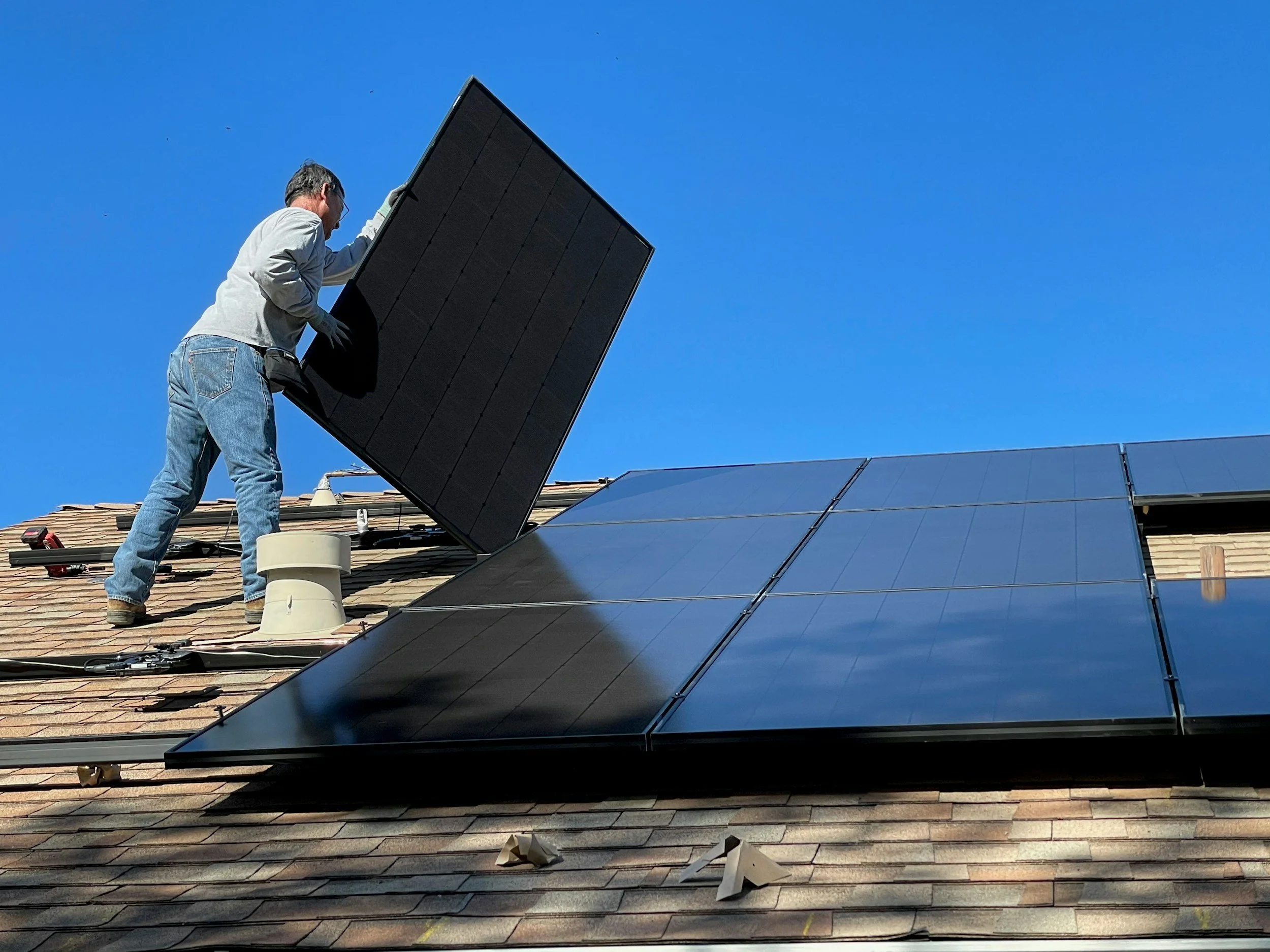
The entire idea of feed in tariffs for solar PV electricty generation is ludicrous anyway. For the declared aim is to develop the industry, support an infant industry, so that prices fall and finally it will become economic to actually use solar PV electricty.

But Britain is a tiny, tiny, market by global standards for this technology. It's not just that we're only throwing a few hundred million £s at it, it's that given what we have for weather, it's not a good technology for us anyway. It's the huge great big gobs of money that places like Germany, Spain and China are throwing at the industry which is making it cheaper: prices for the cells themselves are falling by 4% a quarter, 20% a year when compounded. And yes, it is the falling price of the cells which is driving prices down, not their packaging or installation. And absolutely no one at all is sugggesting that we should build a solar cell manufacturing plant in the UK: for the price of a silicon fab alone we could build four or five nuclear power stations.

So the rational thing for the UK to do is simply wait a decade, when solar PV will at current cost cutting rates actually be economic, and then install it.

But even if those who rule us insist that we must indeed have feed in tariffs, then we do in fact want them to go to the most, not the least, efficient solar PV plants. So, is that what is being done?

The companies are furious over the potential Government reversal on supporting subsidies for farms of up to 5 megawatts - projects which cover acres of the countryside or old industrial land in solar panels . However, Ministers now look set to ensure the £360m pot of funding is directed solely to individuals putting solar panels or wind turbines on their roofs.

No, that isn't what is being done at all. The government is specifically and exactly insisting that whatever taxpayer or energy user subsidies are on offer must be directed to the most inefficient subset of an already inefficient technology. One that will become efficient soon enough without our doing anything at all.

This is insane.

Come along now Westminster and Whitehall: the villages of England would like their idiots back, where we can keep an eye on them and make sure they come to no harm and they do no harm to us.

View comments

A missed opportunity

Written by Tom Bowman | Thursday 02 October 2008

In his big speech at the Tory conference yesterday, David Cameron said, "Freedom can too easily turn into the idea that we all have the right to do whatever we want, regardless of the effect on others. That is libertarian, not Conservative..."

No, David, it's not. Libertarianism is a political philosophy based on individual rights, personal responsibility, free markets, and limited government. In no way does it imply a lack of concern for others, or legitimate harming them to serve your own interest. Indeed, the paramount importance that libertarians attach to the protection of the individual renders Cameron's statement absurd.

And I suspect he knows it too. After all, back in 2001, he wrote: " I am an instinctive libertarian who abhors state prohibitions and tends to be sceptical of most government action". Now, that sounds like my kind of Conservative. 
 
The rest of the speech? Well, it seems to have been well received. There was good stuff on reforming education, restoring sound money, cutting government waste and reducing corporation tax by three percent. In terms of making him look like a serious man for serious times, it did the job. On the downside, I didn’t like his praise for the NHS and thought using the death of one of his constituents to score a political point was mawkishly tasteless.

Overall: a decent enough speech, but by no means a great one.

View comments

Pages

About the Institute

The Adam Smith Institute is the UK’s leading libertarian think tank...

Read more