Blog RSS

The Pin Factory Blog

"Little else is requisite to carry a state to the highest degree of opulence from the lowest barbarism, but peace, easy taxes, and a tolerable administration of justice" - Adam Smith

Common Error No. 59

Written by Dr Madsen Pirie | Wednesday 12 March 2008

59. "We need a Human Rights Bill to protect our liberties."

justicepic1.jpg
A Human Rights Bill is something which looks plausible on the surface, but disastrous when you look deeper into it. Such a bill would be a written codification of the liberties which Parliament thinks should be enshrined into a written law. In fact most of our liberties come from conventions and assumptions added to over the centuries. Some were acquired from individual laws passed by Parliament, some arose from celebrated legal judgements which enshrined an important principle.

Any attempt to write them all down will be forced to simplify them into a manageable text. Many of them have the nuances of precedents which arose in practice and are difficult to codify. Inevitably, such a text would be given priority over the history, losing subtle threads of association in the process.

Furthermore, once the principle of a Human Rights Bill were established, every pressure group in the country would try to get their particular hobby horse through its door and admitted as a 'human right.'  People would campaign to get the rights of children not to be chastised by their parents, and the right of unborn foetuses to be protected from abortion, or from mothers who drink or smoke. The right to free and equal education would be inserted to have independent schools closed down. The Bill would be an instrument to get the force of law to do things which elected Parliaments have thus far declined to do. In its drafting it would be near impossible to keep the contentious 'positive rights' separate from the negative rights which have constituted our liberties.

Parliaments have been scant respecters of those liberties in recent years, but a Human Rights Bill, far from protecting them, would open the floodgates to even more abuse and erosion of them, taking away our freedom in order to give others what some think should be their 'rights.'

View comments

Common Error No. 6

Written by Dr Madsen Pirie | Thursday 10 January 2008

6. "Nuclear power is uniquely dangerous and should be banned."

Most forms of energy production are dangerous. The number of deaths or serious injuries caused by the generation of nuclear power is very limited, even including those caused in the Soviet state-sector Chernobyl disaster. The numbers which result from other power sources are documented.

Coal mining, for example, kills several hundred each year throughout the world in mining accidents. It kills thousands of miners from lung diseases. It kills hundreds of thousands from its acidic and polluted smoke. Oil and gas kill their numbers in fires and explosions, and from suffocation. Hydro-electric power claims its victims as dams burst upon villages. The generation of electricity kills by the air-pollution which power stations cause, however they are fired. If solar power, wind power or wave power ever could be developed to supply a sizable fraction of the needs of an advanced economy, no doubt they, too, would claim their victims in various ways. Remember: wind power is not pollution free. It takes energy and materials to make and install those windmills.

Nuclear power may not be 100 percent safe. It is not, however, uniquely dangerous, and is safer than many of its rivals. It offers a relatively clean, cheap, and safe source of power. It is, in the form now being used, a renewable source. The new reactors use fuel more efficiently and are safer, and new and more secure methods of waste disposal and storage are continually being developed.

It would take many, many mishaps for nuclear power even to approach the coal industry in terms of damage to life and health. And nuclear power could never have the environmental impact caused by the burning of coal, especially of the dirty coal which is easier for developing countries to afford. Fusion power is probably the best future possibility, if it can be done, but until then nuclear power is a relatively clean and safe option.

View comments

Common Error No. 60

Written by Dr Madsen Pirie | Friday 14 March 2008

60. "Alcohol should be made more expensive and less widely available to combat binge drinking and yobbery."

beer.jpg
Many people who put no great faith in the price mechanism elsewhere happily advocate big price increases for things they disapprove of. Such things include smoking, budget air tickets, petrol, and alcohol. Price increases can indeed change behaviour, but it is poorer people who are hit hardest; the rich can afford the increase.

The assumption behind the anti-alcohol campaign is that low prices promote binge drinking, and the attendant anti-social behaviour sometimes seen in young drinkers. It is by no means clear that this is true. People in some other countries where alcohol is cheaper do not have the binge drinking or lout problem to anything like the same extent. It seems to be a cultural thing which affects some countries more than others.

An increase in the price of drink would probably just prompt a switch among binge drinkers to cheaper types, or perhaps to illegal substitutes. Meanwhile respectable middle-aged couples would have to pay more for their bottle of wine, and the great majority of Britons who do not binge drink and commit anti-social acts would be punished for the sins of the minority who do.

Similarly there are those who urge that pubs and bars should have reduced opening hours to deny drinkers the opportunity. Again, it seems that facilities enjoyed the many are opposed in order to target the abuse committed by a few. Determined binge drinkers would continue to drink, but at home or outside, rather than in licensed premises where the decision of the proprietor when to stop serving them exercises at least some restraint.

Countries which make it difficult to drink through state monopolies or huge liquor taxes seem to suffer greater drink problems than more easy-going ones. To curb drinking excesses, it is the culture that must be changed, not the availability of alcohol.

View comments

Common Error No. 61

Written by Dr Madsen Pirie | Saturday 15 March 2008

61. "It is important for us to understand the causes of poverty."

No. There are no causes of poverty. It is the rest state, that which happens when you don't do anything. If you want to experience poverty, just do nothing and it will come. To ask what causes poverty is like asking what causes cold in the universe; it is the absence of energy. Similarly poverty is the absence of wealth. For most of humanity's existence on this planet, poverty has been the norm, the natural condition. People hunted to survive or lived by subsistence farming, and they were poor. In some parts of the world this is still the case.

The unusual condition is wealth. This is what changes things. We should ask what are the causes of wealth and try to recreate and reproduce them. When you ask the wrong question, "What causes poverty," you end up with wrong answers. People fall into the trap of thinking that the wealth of some causes the poverty in others, as if there were a fixed amount of wealth in the world and that rich people had seized too large a share of it.

In fact wealth is created, and it is only during the last 250 years or so that we have found how to do this on a grand scale. Wealth is created by production and enterprise, by the specialization of labour, and most of all it is created by exchange. Instead of trying to take wealth away from rich people and redistribute it, we should be seeking to implement the conditions in which as many people as possible can join in the wealth-creating process for themselves.

Poor countries will not become wealthier because we give them some of our riches. They will climb out of poverty the same way we did, by producing and selling goods and services and by creating wealth in the process.

View comments

Common Error No. 62

Written by Dr Madsen Pirie | Sunday 16 March 2008

62. "A person's economic or political viewpoint is only the unconscious expression of their class interest."

This argument is elevated by the name of "Sociology of Knowledge" and implies that some views can be ignored because they reflect only the self-interest of those who hold them. The bourgeoisie support liberty, for example, only because they get rich when they are free to exploit. In its extreme form it rejects philosophy, art, literature and culture as no more than expressions of the self-interest of those who produce them. Deconstructionism, for example, supposes that any account reflects only ideological bias, and that history is only about power and domination.

The attitude is profoundly anti-intellectual and anti-rational. It suggests that people with an interest have no case to put. It might be that the condemned murderer awaiting execution has good arguments against the death penalty; but on this thesis they need not be listened to at all because they echo only his or her self-interest.

This analysis is a recourse of those who lose arguments. When the logic and the facts show their views to be erroneous, they respond by saying that this is only 'bourgeois' logic, and that there are no facts, just a series of experiences. In reality both the argument and the evidence are on the side of those who point to the creativity which freedom and enterprise unloose, and to the solid achievements gained by such societies in contrast with rival systems.

An interesting feature of this approach is that it is never taken to apply to those who use it. They are never taken to be expressing their own class interest as leftist intellectuals who would end up with power if their views prevailed. On the contrary, they are taken to be the only group whose "correct analysis" has cut them off from expressing any class interest. Just as one might expect.

View comments

Common Error No. 63

Written by Dr Madsen Pirie | Monday 17 March 2008

63. "We need ID cards to help fight terrorism."

idcard.jpg Terrorists constitute the one group which seems to have no difficulty in gaining access to forged and false identification. If ID cards were introduced in Britain, no competently equipped terrorist would be without one. Terrorists do not usually write the word "terrorist" as their occupation; they try to hide their purposes, and only surface as terrorists at the moment of their crime.

It is all very well to talk of higher technology to combat ID card forgery, but the technology of the forgers advances, too, and many terrorist groups have the resources to use it.

What ID cards are actually about is control. They enable authorities to know our movements, along with a great deal of other information. We have always been reluctant to grant gratuitous information to those in authority because we have so often seen it misused. Just as sophisticated phone-tap technology is now used by local authorities to search for people involved in fly-tipping, so we can expect the information on ID cards to make its way rapidly down the scale of offences and be used against individuals suspected of trivial misdemeanors.

We have learned to our cost that every level of government is careless with the information it stores on us. Even if authorities did not misuse the information themselves, it is quite likely that their slipshod controls would make it easy for those with criminal intent to do so. There have been incidents of highly sensitive information lost on mislaid disks, or stolen while inadequately protected. The very collection of so much information together would create risks of it falling into the wrong hands.

Government talks of combating terrorism, but the real purpose of ID cards is probably to control employment of illegal immigrants or to fight benefit frauds. There are better and less expensive ways of doing this than subjecting the whole citizenry to an ID card regime.

View comments

Common Error No. 64

Written by Dr Madsen Pirie | Tuesday 18 March 2008

64. "Freedom is all very well for the strong, but the poor and the weak come off worse without the state services."

In fact the poor and weak usually get the short end of the stick within the state services. With limited resources and many claims on them, the best of the state service tends to go to the articulate and self-confident middle classes who know how to use the system. Under a system which allows these people the freedom to provide for themselves, the state can concentrate its scarce resources on those who really do need them. Universal services and benefits have to spread their resources thinly to everyone.

It is not just the "strong" who benefit from freedom. Most people benefit by giving effect to preferences and having competitors struggling to supply them. Everyone benefits by the improvement which innovations and new types of service bring when the service is private. It might be the strong who take the lead in demanding better services, but the improvements made as a result usually spread down to benefit others. It is the discriminating customers who improve the product, but everyone gains from the improvement. Even those who know nothing about electronics have their products improved by the actions of those who do.

There is good reason to suppose that if the poor and weak were given the same type of choices that others have, they would get better services than those doled out to them under universal state provision. Choice of schools, as in Sweden, leads to improvement in education and in parental satisfaction. Choice in healthcare would achieve similar improvement.

The weak can receive more support if resources are not dissipated among those who could do without it. It might be better simply to allocate money directly to the poor to enable them to command adequate services. The freedom to choose is as valuable to those in the lower economic strata as it is to the strong, for it gives them access to the better services they need.

View comments

Common Error No. 65

Written by Dr Madsen Pirie | Wednesday 19 March 2008

65. "Drug patents should be scrapped so third world countries can access them."

pills.gif Scrapping drug patents would be a sure-fire way of reducing the number of therapeutic drugs being developed and marketed. Pharmaceutical firms research new ones to bring future profit streams for their company. The scientists might work from commitment or for peer group respect, but company money provides the research facilities, the equipment, the grants and the salaries.

There is a compromise between allowing the drug companies to recoup their costs and show a return, and allowing them to exploit monopoly prices. At present they are allowed 20 years of patent protection before other companies can copy their work and produce generic equivalents. The research company has to recoup its investment within that time before it faces competition from low cost variants of it drug.

In practice their 'protected' time is shorter. The process of testing and trials, of attempting to establish product efficacy and safety, and the process of securing regulatory approval takes an estimated 12 years from when the patent is registered. That leaves 8 years of unique market exploitation, and it is why some drugs cost so much.

Poorer countries cannot afford these prices, and there are calls for them to be allowed generic copies. If this happens, the cheaper versions will rapidly leak into rich country markets, undermining the drug's and the manufacturer's profitability and their ability to continue to develop new drugs. Some drug companies have, however, reached voluntary agreements with poor countries, allowing controlled generic production for poorer patients.

The present compromise broadly works, and means that rich country patients pay high prices for drugs so that in a few years poor country patients will have access to them at lower prices. It means rich people have the first access to new drugs, as they do to everything, but it also means that poorer people can benefit from them later on.

View comments

Common Error No. 66

Written by Dr Madsen Pirie | Thursday 20 March 2008

66. "Schools should provide our children a risk-free environment."

There is no such thing as a risk-free environment. There are degrees of risk and there are ways of managing risk. Growing up is not a risk-free zone. Children learn by making mistakes. They hurt themselves and each other at play. Each day has its coterie of bumps and bruises and grazes. On more serious occasions bones are broken.

Schools cannot be risk-free. They have hard surfaces and corners, desks and chairs. They feature sports and games. Children will injure themselves. There is a balance to be struck between recklessly exposing children to potential dangers and maintaining such tight controls that they have no independence or learning experience. Schools which ban marbles because people might slip on them or swallow them, or which ban conkers because a child might get struck by one, are in effect banning part of childhood.

The attempt to be risk-free leads schools to abandon foreign visits such as ski trips, and adventure holidays such as canoeing or camping. Even educational visits can be banned because of the risk of traffic accidents en route. None of this does the children any favours. It denies them learning experiences, and it even denies them the carefree fun and excitement that childhood should involve.

Part of the problem is the litigation culture which assumes that everything that happens is somebody's fault, and that someone has to pay every time any child is injured. Part of it is the health and safety bureaucracy seeking to cover itself. Anything that happens will be laid at its door, so its officials seek to anticipate all eventualities and allow nothing that could come back at them. They try to make schools places where no-one has cause to sue, or to blame health and safety officers for failing to anticipate accidents. In doing so they make schools unfit for children. Schools, like childhood itself, cannot be risk free.

View comments

Common Error No. 67

Written by Dr Madsen Pirie | Friday 21 March 2008

67. "Some things, such as health, should not be provided for gain."

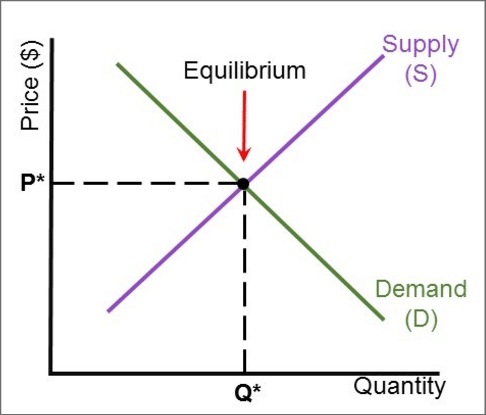
Why not? If gain will motivate people to supply necessary goods and services, then it can be a useful way of ensuring supply. All goods and services cost something, and the prospect of gain is a good way of encouraging people to produce them. Price, as an indicator, tells them where to direct their activities. Where prices are high, people produce because profits can be made; and in producing, they alleviate the shortage which caused those high prices.

A genuine market in such things as health would put resources where they were needed. Enough people would go into health care to meet the demand for it. It would settle at a level that people were freely prepared to pay for. For decades Britain has spent less per head through its NHS than have its partners with larger private health sectors. People spend more themselves than they will do through taxation.

This is not because the British NHS gives better value. On the contrary, it achieves poorer results overall. Britain has less scanners per 1,000 of population, less renal dialysis units, less kidney transplants, and less of almost every objective measure. It also has higher early death rates on many major illnesses.

Food might be thought even more important, but imagine what the food situation might be if most people were dependent on government supplied food, financed out of taxation, run by the bureaucracy, and available only from approved supply outlets. Even though food is important, the private market is much more capable of guaranteeing us the appropriate supply than would a state-planned system.

If we want a society in which even poor people have adequate healthcare, there is a better way than mass state provision. It is to ensure that quality healthcare is widely available, and that resources are provided to give poorer people access to it.

View comments

Pages

About the Institute

The Adam Smith Institute is the UK’s leading libertarian think tank...

Read more