Blog RSS

The Pin Factory Blog

"Little else is requisite to carry a state to the highest degree of opulence from the lowest barbarism, but peace, easy taxes, and a tolerable administration of justice" - Adam Smith

Environmentalism – as Germany goes, so goes the EU

Written by Friedrich Hansen | Friday 19 November 2010

german-greens

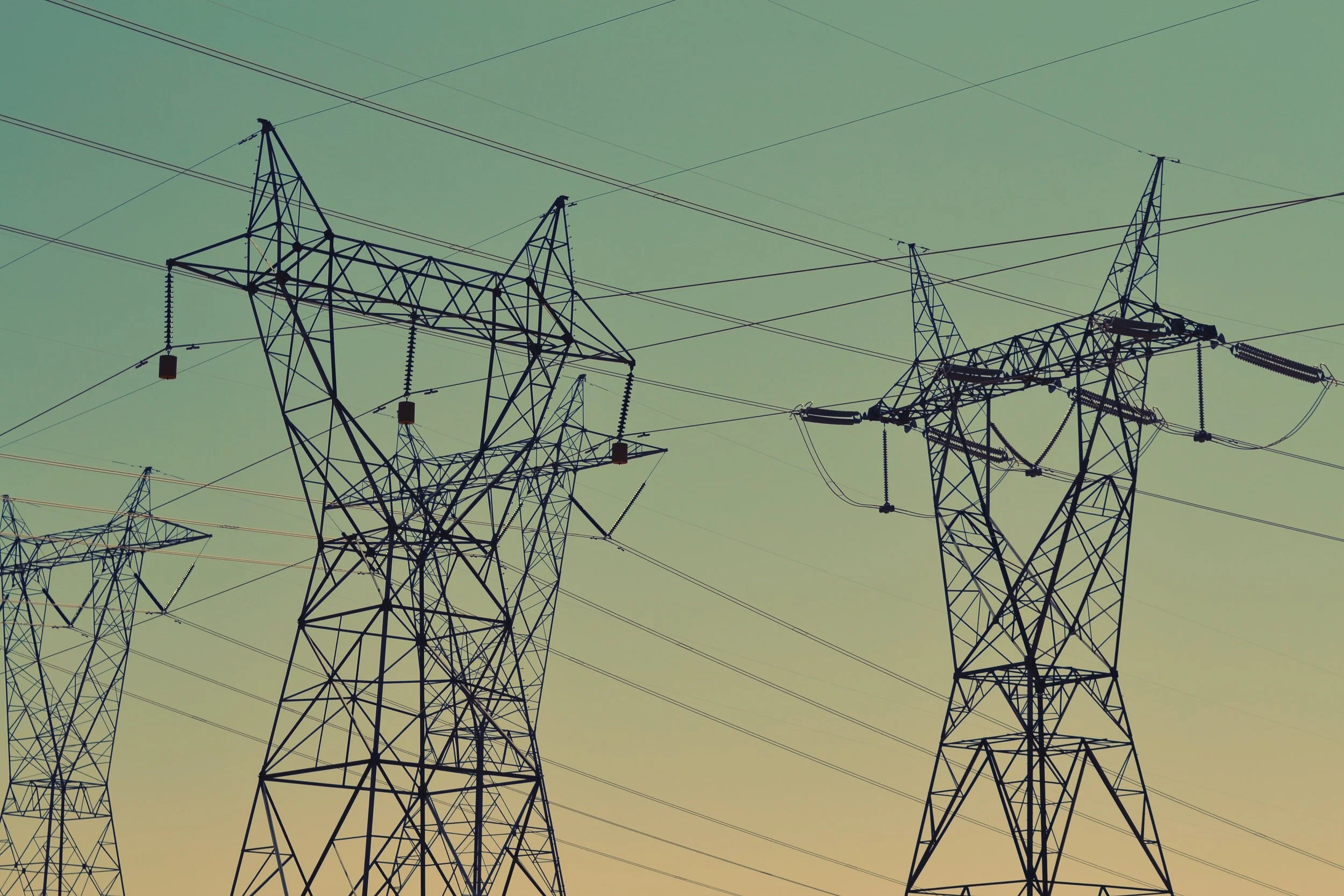
The German Green Party, which is on the rise again (having won an additional seventeen seats in last year’s elections), has set the target of running their country on 100% “clean” energy by 2050, and plans on lobbying for more import restrictions on “unclean” products into the EU. If the Greens get back into government in Germany and implement these sorts of policy, it will create a huge upward struggle for consumers both in Germany and across the EU.

The term “clean renewables” is a piece of politically correct doublethink which includes things like hazardous bio-diesel (which, incidentally, drives up food prices) but excludes nuclear energy which unless run by wasteful communists is ultra-clean. They can also be enormously expensive.

But never mind – it's the consumer who will pick up the tab, and environmentalists rarely care about that. Climate-friendly retrofitting of Germany's buildings could amount to €2.5 trillion, which owners will transfer to tenants through increased rents. Germany has one the highest numbers of renters to homeowners in Europe. Therefore, this matter hugely for disenfranchising households in terms of energy costs. “Green” requirements like these are simply a form of indirect taxation that hit the poor hardest, and those who can’t afford to pay for the government’s green energy targets will be forced to move out of the bigger cities like Berlin and Frankfurt.

Environmentalism has been invoked to justify economic "stimulus" programmes that “create” green jobs. It does not – it simply redirects resources from things that people want to things that the green lobby want. Consumers are forced to buy new versions of expensive everyday products—from refrigerators to cars—not because of age or deterioration, but because they no longer conform to the most recent environmental standards.

These rules also serve as stealth tariffs to block trade – so plastic dolls from China and genetically modified food from Brazil can both be blocked under the cover of environmentalism. Some might see an unholy alliance of environmentalists and industrialists in these import restrictions. (Is the green lobby in the pocket of Big Industry?)

Where the German ecological-industrial complex leads, the rest of Europe will probably have to follow, thanks to Germany’s huge influence over the EU. The rise of the German Greens is bad news for Britain, and could be even worse if British environmentalists make similar gains.

View comments

Michael Caine explains the laffer curve

Written by Wordsmith | Thursday 18 November 2010

I left for eight years when tax was put up to 82 per cent. The newspapers said: "Michael Caine's leaving: let him go, the stupid, overpaid, loudmouth idiot, who cares where he goes?" Well, you didn't get 82 per cent tax from me for eight years and a quarter of a billion dollars worth of movies were outside this country instead of inside it. Now, that is just one stupid, loudmouth moronic actor. Imagine what happens with companies that disappear.

Sir Michael Caine, via The Spectator's Fraser Nelson

View comments

Review, part one: Matt Ridley's "The Rational Optimist"

Written by Dr Madsen Pirie | Thursday 18 November 2010

rational-opt"The Rational Optimist" is so densely packed with information and arguments that it will take at least two reviews to cover it, and maybe more. I use this first one to draw attention to one of his central themes: that self-sufficiency lines the road to poverty and ruin. Although self-sufficiency has been praised through the ages as representing some kind of simple and virtuous independence, what it actually embodies, argues Ridley (with a huge weight of historical evidence) is a lack of the exchange and specialization which bring about wealth creation and prosperity.

Furthermore, says Ridley in an echo of Richard Cobden, communities that exchange goods and services learn to co-operate peacefully with each other and to build up trust. It is in the self-sufficient, isolated societies that we find not only poverty, but suspicion and xenophobia. Humanity has made its greatest strides through co-operation. It is our propensity to exchange goods, even with strangers, that distinguishes us from the other animals. It has enabled humankind to lift itself from the subsistence economies that self-sufficiency represents. Because we exchange, specialization is possible, and each of us can draw on the skilled talents of many. The primitives who exchanged fish hooks for furs enabled the fisherman to be warm and the fur trapper to eat fish. They each enjoyed the work of both and were lifted out of self-sufficiency.

Ridley's message is highly relevant today. He tackles head-on the absurdity that we should try to buy food locally. Why not cars and washing machines? And why just within countries instead of within towns, villages or even streets? He exposes the nonsense of 'food miles' and shows that an inter-dependent world in which people buy and sell goods and services to each other is a world that uses resources more efficiently, as well as enriching those who do it.

Some people like to wallow under a steady drip of gloom, but Ridley is not one of them. Humanity is better fed, in better health, and faces better prospects, he points out, than it has ever done. He does not, in a Panglossian way, deny problems. But he thinks that, provided we continue to trade and exchange, there will be a continuing incentive to innovate and to invent, and human creativity is the surest route to solving problems.

View comments

A breath of fresh air in airline regulation

Written by Sam Bowman | Thursday 18 November 2010

Over in the think pieces section of the site, you can read Karthik Reddy’s analysis of the UK’s aviation industry and his recommendations for improvement of the industry. Karthik says that among the biggest problems facing the industry is the fact that the government allocates airport take-off and landing slots to airlines based on perceived need rather than on the ability of these airlines to pay.

As with many government schemes that try to allot scarce resources along supposedly ‘just’ lines, the airport slot system is rife with negative unintended consequences. Because airports slots are taken away from airlines which don’t use them enough, airlines are often forced to fly nearly-empty (sometimes completely empty), loss-making flights in order to maintain usage and meet the targets needed to maintain possession of the slot. Remedies to these problems, like requiring a certain number of passengers on flights, have led to ridiculous situations like the airline Flybe hiring actors to fly between Dublin and Norwich to meet numbers. The problem with government targets like this is that the market is necessarily ingenious at getting around them.

The government’s attempts to be judicious with scarce airstrip slots has in fact created even more of a scarcity, by forcing airlines to fly unwanted flights at the expense of passengers for flights that are in demand. Karthik recommends that this scarcity be eliminated by auctioning off the slots to the highest bidder and allowing them to be used in the way the market deems to be the most efficient. (Note that, as well as airlines and other businesses, bidders could include local residents who want to avoid the 6am wake-up call from the local airport – if they are prepared to put their money where their mouths are.)

As well as landing slots, Karthik discusses the regulation of airports themselves that has created poor services and a shortage of airports around London (and arguably a surplus of airports in the rest of the country due to political concerns). The think piece shows that many of the worst inefficiencies in the aviation sector come from artificial scarcities created by government. As Karthik says, we should give everybody a breath of fresh air and set Britain’s aviation industry free.

View comments

On creative destruction

Written by Wordsmith | Wednesday 17 November 2010

A Bronze Age empire stagnated for much the same reason that a nationalized industry stagnates: monopoly rewards caution and discourages experiment, the income is gradually captured by the interests of the producers at the expense of the interests of the consumers, and so on. The list of innovations achieved by the pharaohs is as thin as the list of innovations achieved by British Rail or the US Postal Service.

Matt Ridley, The Rational Optimist.

View comments

You can’t 'buck the market'

Written by Nigel Hawkins | Wednesday 17 November 2010

With EU currency and bond markets in turmoil, Lady Thatcher’s famous aphorism rings very true. For many months, the euro has been taking a hammering as its constituent members find their economies diverging so starkly – without the scope for currency adjustment to boost exports.

The current state of both the Greek and Irish economies is dire. Both have imposed harsh public expenditure cuts to reduce their excessive public debt. But yields on both Greek and Irish bonds continue to soar as the markets adjust to the risk of default. In Ireland’s case, its 10-year bond is now yielding around 8.2%, compared with just 2.6% in Germany and 3.3% in the (non-Euro) UK.

The Celtic Tiger of the past, whose banking system is on its knees, now faces pay-back time. Despite vigorous denials by the Irish government, it is expected to receive a massive bail-out from the EU in order to save the euro from collapse. The euro’s fate will depend largely on the European Financial Stability Facility, which – along with the promised IMF support - is probably robust enough to prop up Greece, Ireland and Portugal, whose plight is almost as grim.

Most concern will focus on Spain, whose economy is far larger – and therefore far more capable of collapsing the Euro. Hence, saving the euro in Spain is of paramount concern to the EU, especially since European banks have an estimated £750 billion exposure to the Spanish economy.

If there are widespread bond defaults in the weaker EU countries, the impact on many leading banks, especially in Germany and France, will be devastating. The size of the ‘haircuts’ would do immense damage to their already stretched balance sheets. Neither are UK banks immune, especially the 83% state-owned Royal Bank of Scotland (RBS), whose share price has weakened to just over 40p. What a mess – you really can't ‘buck the market’. 

View comments

Reducing long-term unemployment with negative NI

Written by Nicholas Beale | Wednesday 17 November 2010

moneyLong-term unemployment is an intractable problem. Reducing disincentives to take jobs is only half the battle. Given several applicants for a job, most employers will be reluctant to hire someone whose working skills are rusty or non-existent, and the supply of jobs at or above the minimum wage is constrained.

But suppose that if you hire Alan, who has been claiming unemployment benefits for the last 18 months. Instead of paying employer's National Insurance, you receive 80% of the first month’s wages as negative NI. Each month this reduces 5%. If you are paying £8/hr, Alan’s wages are only costing you £1.60/hour in month 1. In month 2 this goes up to £2.40 etc. but Alan will be progressively more valuable.

This should actually save the taxpayer money. Even after reforms, benefits are withdrawn at 65% and Alan’s extra income should generate VAT and other tax revenues of at least 40p/hr. So even in month 1 the “subsidy” of £6.40/hr is offset by benefits savings and tax revenues of £5.60/hr. By month 2 the net cost is zero and after month 3 it is saving the taxpayer money in cash terms, let alone the benefits in terms of health, skills, social integration and economic output .

If Alan has been claiming JSA for (say) 12 of the last 18 months then the negative NI would start at 50%, and the taxpayer starts saving money immediately.

Some safeguards would be needed. Special dispensation should be required for any employer whose total employer's NI bill became negative, and the hourly rate at which negative NI is paid should be capped. But the scheme should be kept very simple so that even small employers could easily understand and use it. Creating jobs, saving money, helping people rebuild their lives: over to you George.

View comments

Riding the EU's gravy train

Written by Rebecca Greeves | Tuesday 16 November 2010

euMonday night’s Dispatches highlighted afresh the scandalous way in which the EU continues to haemorrhage taxpayers’ money. David Cameron has fought to bring down the budget rise to 2.9% (from a proposed 5.9%), but this still means an extra £400 million of UK taxpayers’ money will be going to Brussels next year. Particularly in this time of unprecedented cuts in state spending, we need to get radical in saying no to the EU.

700 MEPs oversee a budget of over £100 billion, and each of the UK’s 72 MEPs is paid around £80,000 per year – £15,00 more than the average MP. While there has rightly been uproar over MPs’ use of public funds, there are few requirements on MEPs to produce receipts for their expenses. Profits made from taking allowances that exceed their expenditure typically give each MEP an extra £7,000 per year, which they may choose to pocket. While they’re taking our money, Dispatches showed our elected representatives clocking in at the European Parliament, and promptly going home again.

We need an end to the EU’s legal superiority over its member countries: it is too expensive, too powerful, and undemocratic. These latest revelations simply serve to emphasise the need for the imposition of fundamental reforms.

View comments

Private legal aid will cut litigation abuse

Written by Sam Bowman | Tuesday 16 November 2010

The cuts to legal aid announced yesterday follow a report published by the ASI this summer which called for a radical redesign of the legal aid system that ends the subsidy for litigation. Understandably, some people are alarmed – withdrawing legal aid means that the recourse to the courts will be out of the reach of many people. But the government subsidy creates the wrong incentives for people and encourages an overly litigious society. Free legal aid is sometimes a good thing, but it has to be done by private charities to avoid abuse.

As I have written before, government programmes must be blind to specific circumstances as much as possible. This is partially to limit unpredictability, but largely to avoid giving too much power to government bureaucrats. If much discretionary power is invested in individual civil servants, they can abuse these powers and create injustices in the system. On the other hand, private charities can choose who they want to help based on the specific circumstances of the person in need. Obviously, this allows them to minimise abuses in a way that the necessarily-blind government programme cannot – they can spot the people who are acting within the letter but not the spirit of the rules, and can use more discretion to prevent abuses of the system.

The private charity sector avoids the downsides of the overinvestment of power in individual caseworkers for two reasons. One is that charity money is voluntarily given, so the donor has every right to be picky about whom her money goes to. The second, “demand-side” point is that without government crowding out effects, a multiplicity of charity providers will offer services, filling in the gaps. If, for instance, a charity’s workers discriminate against redheaded people, some people will direct their money towards charities that provide for them. If the government discriminates against red-headed people, it is extremely difficult for people who have already been taxed to pay for the welfare system to extend themselves even further to fill in the gap.

This argument applies to legal aid just as it does to other forms of government welfare. Government subsidies for litigation have had harmful effects on the legal system and society because legal aid has had to be given for even very spurious cases, in order to give the wannabe litigant the benefit of the doubt. Allowing the private free legal aid sector to fill in the government’s role will improve discretion without creating abuses of power.

View comments

Should we be optimistic about economic education?

Written by Philip Salter | Tuesday 16 November 2010

The state of the structural deficit requires cuts to spending if we are to avoid going bust. Only someone bereft of the facts and a rational mind could argue anything different. As Allister Heath of City AM pointed out last week “reasonable people can disagree about what the priorities should be; but nobody can deny that the government is spending close to 20 per cent more than it is collecting in tax. Countries that go on like that for too long eventually go bust.”

Supporters of a minimal state can on the whole admit that cutting isn’t in every instance going to lead to more positive outcomes than we currently have. Stopping spending is really only part of the battle. The more important job is freeing people from the plethora of regulations thwarting those who have the drive and ideas to increase the economic pie. We have all been living on borrowed money for too long in an overregulated economy and society estranged from its tradition of self-help.

The immediate concern is to ensure that the current government does indeed cut public spending while reforming public services. However, the larger challenge is to ensure that more people in the country have a better understanding of the economic way of thinking. A while back Allister Heath called on Goldman Sachs to spend £1bn on financial and economic education. Sadly, I’m not so sure it’s entirely in Goldman’s interest to have a population that understands finance too well. As such, the work of the Adam Smith Institute and others remains vital.

Perhaps there is room for some optimism though. Recent popular economics books by authors such as Steven Levitt, Tim Harford, Peter Leeson and Nassim Nicholas Taleb show that there is an appetite for the pretty robust works that explore the economic way of thinking. More importantly economics on the internet is a place where obfuscation is pounced upon by smart amateurs that are as likely to be better informed than the expert. If students increasingly eschew the mass media and get their economic education from such websites as The Library of Economics and Liberty, Marginal Revolution, Coordination Problem, Think Markets and David Friedman's Ideas rather than the mass media, this country would be both intellectually and materially richer for it.

View comments

Pages

About the Institute

The Adam Smith Institute is the UK’s leading libertarian think tank...

Read more