

Small Modular Reactors: Why are we so determined to be at the back of the queue?
The Department for Energy Security and Net Zero (DESNZ) has just announced the winners in the competition to select suppliers of Small Modular Reactors (SMRs). GB Nuclear is supposed to be the driving force, independently choosing the latest and the best, but DESNZ has stepped in and included some of the least modern or qualified. The six are: EDF, GE-Hitachi Nuclear Energy International LLC, Holtec Britain Limited, NuScale Power, Rolls Royce SMR and Westinghouse Electric Company UK Limited. These are all old tech: no advanced modular or molten salt reactors. They are high pressure and low temperature. They are all low temperature despite DESNZs claim a couple of years ago that high temperature reactors are the future. DESNZ hopes to get around to ordering the first SMR by 2029 and actually having it running six years later. Four of the six are a long way from receiving design approval and EDF, for example, has no SMRs and has to go back to the drawing board. This should give them time to do so. None of those chosen is “rampable”, i.e. output can be varied by the Grid to match demand. Modern ones are.
Three companies (Terrestrial, Arc Cleantech and Kairos) already have design approval in the USA or Canada or expect to receive it this year and have good high temperature / low pressure designs. They can also ramp up and down to meet demand. It would seem these and other companies have been put off entering the UK market for SMRs because of the slow decision-making process. This is disputed by GB Nuclear. The Americans and Canadians are linking their SMR technical approval systems so that either regulatory authority’s approval is automatically deemed to be approval by the other. approval by the other.[4] The UK was invited to join but declined. Approvals are slow so that will automatically ensure the UK falls even further behind.
This timeline means that the UK will be trailing the US, Canada, Poland, Romania and the Baltic States in SMR development.

A tobacco ban will make it at least as hard to get as cannabis
This is a bit of a shock to wake up to:
The government is creating the first smokefree generation, by bringing forward legislation so that children turning 14 this year or younger will never be legally sold tobacco products. This will prevent future generations from ever taking up smoking, as there is no safe age to smoke.
Prohibition has always worked so well, hasn’t it? For there will, of course, never be anyone at all who will supply a market even if it be illegal to do so.
This part we think is a masterpiece of illogic:
Major economies such as the USA, Australia and Canada are taking action to tackle sharp increases in youth vaping, and we risk becoming an outlier if we do not keep pace. Learning from other countries and our recent call for evidence, the government is therefore looking at measures to reduce the appeal and availability of vapes to children.
Well, OK, let us learn from Oz. They do have very much stricter rules on vaping than we do. They also have a markedly higher teen smoking rate, one that has been going up as those restrictions upon vaping are enforced. So, let’s learn, let’s not do that then. Except, of course, the insistence here is that we just copy them, not learn from them.
Yes, obviously it’s possible to go on carping at the details here. They still seem to think smoking costs the NHS money when it doesn’t, it saves it. The same is obviously true of the pensions system. This grates: “It is estimated that the total costs of smoking in England are over £17 billion.” for the estimate comes from Action on Smoking and Health, they’re like asking your barber if you need a haircut.
But enough carping and down to basics.
No.
We are all liberals here even if we might be slightly astringent on our economics. Consenting adults get to adult consentingly. This includes ingesting or inhaling fun products as defined as being fun by the person doing the inhaling.
And yes, this is indeed the hill we will die upon. Either we’re all adults who get to live our lives as we wish or we’re children who do not. We vote for being adults which means that bans like this we’ll not be having with.
In short, Prime Minister, Sec of State and Chief Medical Officer, it’s damn all to do with you. So be off with you. It’s not your business so don’t make it so.
Our thanks to Matt Brookes for that headline.

So, whadda ya want? More equality or more regulation?
It’s a fairly standard assumption these days that more equality, less inequality, is better. We’re not sure we share that idea but there we go. We’re also insistent that inequality is very much lower than it is regularly measured as. But again, there we go.
It is also a fairly regular assumption these days that everything must be regulated. We can’t just leave things be, there must be rules over who can do what about which and to whom.
There’s a certain tension between these two:
In the last several decades, despite widespread concerns about rising income inequality and increasing federal regulations in the United States, only a small group of researchers have tried exploring and understanding this relationship to date. Relevant empirical studies, overall, find regulations to exacerbate income distribution, thereby increasing income inequality within an economy. Recently, a similar association has been reported for the U.S. However, the existing analysis lacks evidence of a causal effect. Here, I unravel the causal impact of federal regulation of industries on income inequality across the U.S. states for the time span 1990–2013.
The reasoning should be obvious enough. As with large companies positively lusting after their own industries being more highly regulated in order to defeat any market insurgencies. Regulation keeps those in privilege in privilege. The more normal turnover of economic position that results from changing technologies and entrepreneurial adventure becomes constrained by the regulation which, umm, constrains the both of them.
Which leads to an interesting question. Which do you want? That regulatory state or a more equal one? Because you cannot have both.
This is, of course, delightful for our side of the argument. Kill the regulatory state as we wish anyway and gain also what everyone says they want, more equality. But it is also a bit of a killer for the way we’re actually governed, which is that all say they desire that less inequality while still passing regulations by the library-load.
But it does all lead to the possibility of a plan. We can increase equality in Britain by burning half the legislation and firing half of the bureaucrats. Some would say that this faces a problem, which half of each? But here’s what’s really bad about the current position - we don’t think it matters which half of either, things will still improve.

Violet Elizabeth Bott economics
From the recent JRF report upon poverty in Scotland:
Trapped in low pay – built on gender discrimination
While the National Minimum Wage and the National Living Wage (NLW) have created a more predictable floor within pay levels, the real Living Wage (rLW) is now the widely accepted minimum rate for good employers to pay or aim for. When we refer to ‘low pay’ in this report, we mean pay below the rLW.
Knowing the importance of the rLW, we show that 1 in 10 workers are in persistent low pay, that is, that they have earned below the rLW for at least four of five years. Very few people in low pay are able to sustainably move out of low pay with only 1 in 20 moving to pay above the rLW in the same 5-year period.
To translate, “We and our mates made up a number for nice wages. If anyone disagrees with us that earning below this is poverty then we’ll sthwceam until we turn blue.”
Just to emphasise how silly a number this is. At 1750 hours a year, that’s £19,075. For a single person that’s in the top 6% of global incomes. For a single parent with 2 kids that’s top 15% of the global income distribution. Yes, of course that is PPP adjusted.
That’s not, in fact, poverty. All it is is a little less than other people in the same country get - and more than some others of course. And we really do insist upon this - in opposition to all the Ms Botts out there - that a little bit of inequality simply is not the same thing as poverty.
Poverty is not having a bowl of rice a day - rather than this worrying about whether the second pair of sneakers is bought in JD Sports or Primark.

But why hate inheritance tax if only 4% pay it?
One of those things that we’re seeing said out there. Only 4% of estates pay inheritance tax. Yet 30% of people are against the tax on the basis that they might have to pay it. Well, of course, it’s possible to blame the innumeracy of the general population, which is what many are doing.
An alternative to that is to actually think - yes, yes, we know, this is politics, cogitation is not a positive value here - and to wonder why? Why does such a large portion of the population hate this tax upon dead people? Who, after all, can’t complain that much, they are dead after all.
Yes, we are aware that there’s a darn good classical liberal argument for a 100% inheritance tax. We could - should - succeed by our own efforts not by membership of the lucky sperm club. There is also that opposing - and still classically liberal idea - than an increasing portion of the population economically independent of the State might lead to that desired outcome of a smaller state.
But leave aside the theory for a moment. Why do so many hate something that won’t affect them? One asnwer is that it doesn’t matter. Assume, for a moment, that we are a democracy - ahahaha. So, if the folks are against it then it doesn’t happen. You know, will of the people and all that.
But that point that only 4% of estates pay inheritance tax yet 30% think they will be affected. How do we explain that?
The most obvious point is that the incidence of inheritance tax is not actually upon estates. Yes, there is that Australian finding that people will time their death so that death duties do not have to be paid. But, you know. The real point is that the incidence of interitance tax is not upon the dead nor their estates.
Recall what tax incidence actually studies. Whose wallet gets lighter as a result of the tax? Given shrouds and pockets it’s not the dead, is it? It’s the people who inherit less money as a result of the tax. So the number of people against inheritance tax is not the number of people whose estate will be subject to it when they die, it’s the number of people who think they might inherit from one when someone does.
We’re all, as we know, part of that complex system that is society. Inheritance - even perhaps of modest amounts - is common enough among nieces, nephews, friends as well as direct descendants. The number of people against inheritance tax is not the number dying, it’s those not benefitting from those dying. Or, rather, benefitting less.
This does not, we are aware, answer the question of whether inheritance tax is just, righeous, or the robbing of those no longer able to complain. But it does answer why so many are agin’ it. The incidence of inheritance tax is not upon the dead, nor their estates. It’s upon those who inherit less as a result of the tax. And that might be greedy, a desire for unearned wealth, inequity producing or even bourgeois freedom generating.
But there are many more people hoping to inherit than there are estates being inherited from. Which is why the number of those opposing inheritance tax is higher than the number of estates being taxed.
Seems fairly obvious to us to be honest but we’ve not seen it mentioned elsewhere as yet. The opposition to inheritance tax is those who think they’ll receive less money as a result of it. Which, you know, is obvious, no?

An absurdity about climate change
This is not just an absurdity, it’s wrong:
NHS to ban ‘useful’ anaesthetic to hit net zero targets
But this is what we end up with when we’ve a societal frenzy - as with religious epidemics, to the extent that worshipping Gaia isn’t in fact a religion.
The NHS is banning an anaesthetic gas to meet net zero targets in a move that a leading climate expert has warned lacks any scientific basis.
The health service has said it is “decommissioning” desflurane by early next year in order to help reduce “harmful emissions”.
The first error is to even dream that the NHS itself should be net zero. For that’s not what net zero means.
We don’t even agree with the idea itself - we think that human utility will be maximised over time, the aim of the entire game, by having more climate change and emissions than the net zero target allows. But put that aside for the sake of the argument here.
Net zero means that society as a whole is net zero in emissions. Not that each sector, subsector and detail of society is zero in emissions. That’s the very meaning of the word “net” in there. We cannot all be zero emittive after all - CO2 emissions are an inevitable result of breathing. So, some emissions are to be allowed even if the aim is for the system to be that net zero. And those that are to be allowed are going to be those with the highest value, of course. Like, say, taking away the extreme pain of surgery by providing anaesthesia.
This extends further too of course. People value flying - the average British summer causes that. OK, so that 2% of total emissions that are from flying are something we value highly, quite possibly more than the less climate change that would result from its absence. We can even test this - Air Passenger Duty is at or at least around the levels of a Stern compliant carbon tax and yet the flying still happens. People value flying more than they do the lesser amount of climate change. Therefore - that maximising of utility over time - we should keep the flying at the expense of the extra climate change.
Which does bring us to an interesting result. When we actually examine human preferences properly, by revelation not expression, then we find that net zero isn’t a target that everyone wants. And that before we get to the logical truth that the entire point of net zero is that not every activity needs to be non-emittive.
Or as we can put it, carry on gassing the people in pain and put up with the extra millimetre of water upon Bangladesh.

No, of course we can't trust Britain's economic data
So, that answers this Telegraph piece:
Can we really trust Britain’s economic data?
So, what time’s the footie then?
Ah, you’d like a little more would you?
Yes, the things said are true, an economy is a big complicated thing, difficult to measure, best possible is being done and so on. But we find an extra 2% of GDP down the back of the sofa - from which we can conclude that detailed Keynesian demand management is a very silly idea.
But there’s a much, much, larger problem here. We have endless whingeing about child poverty levels - which are something we don’t even measure. For poverty is now defined as less than 60% of median household income. So we’re measuring inequality of household income, not poverty at all. Beyond that even in these days of late blooming fertility those with children are going to be younger than those who have had them - and household income does tend to rise with age. You know, career progression, all that stuff.
Our measure of wealth deliberately excludes everything the government does about wealth. Currently everyone else pays £6k a year in taxes so your kids can fail their GCSEs. That’s wealth you’ve got which isn’t included in any analysis either of total wealth or wealth distribution. Similarly the NHS. OK, it’s health care that’s indifferent at best and yet purely by being alive in this place at this time you’ve a lifetime supply of it. Something not included in our wealth statistics. They don’t even include the state pension in the pensions wealth statistics. Let alone the wider benefits system which can indeed be modelled like an insurance policy and so have a capital value.
And that’s before we get to consumer wealth. Everyone’s a supercomputer in their pocket, WhatsApp makes international phone calls free to everyone - the Duke of Westminster and the most recent asylum seeker together.
The economic data we’ve got simply is not fit - as with that Keynesian demand management idea - for the purposes people try to use it for. We certainly can’t trust it because it’s measuring the wrong things for any useful purpose.
Measuring the wrongs things and badly - no, that’s not the evidence base upon which to run a polity.
There's a difference between selling something and destroying it
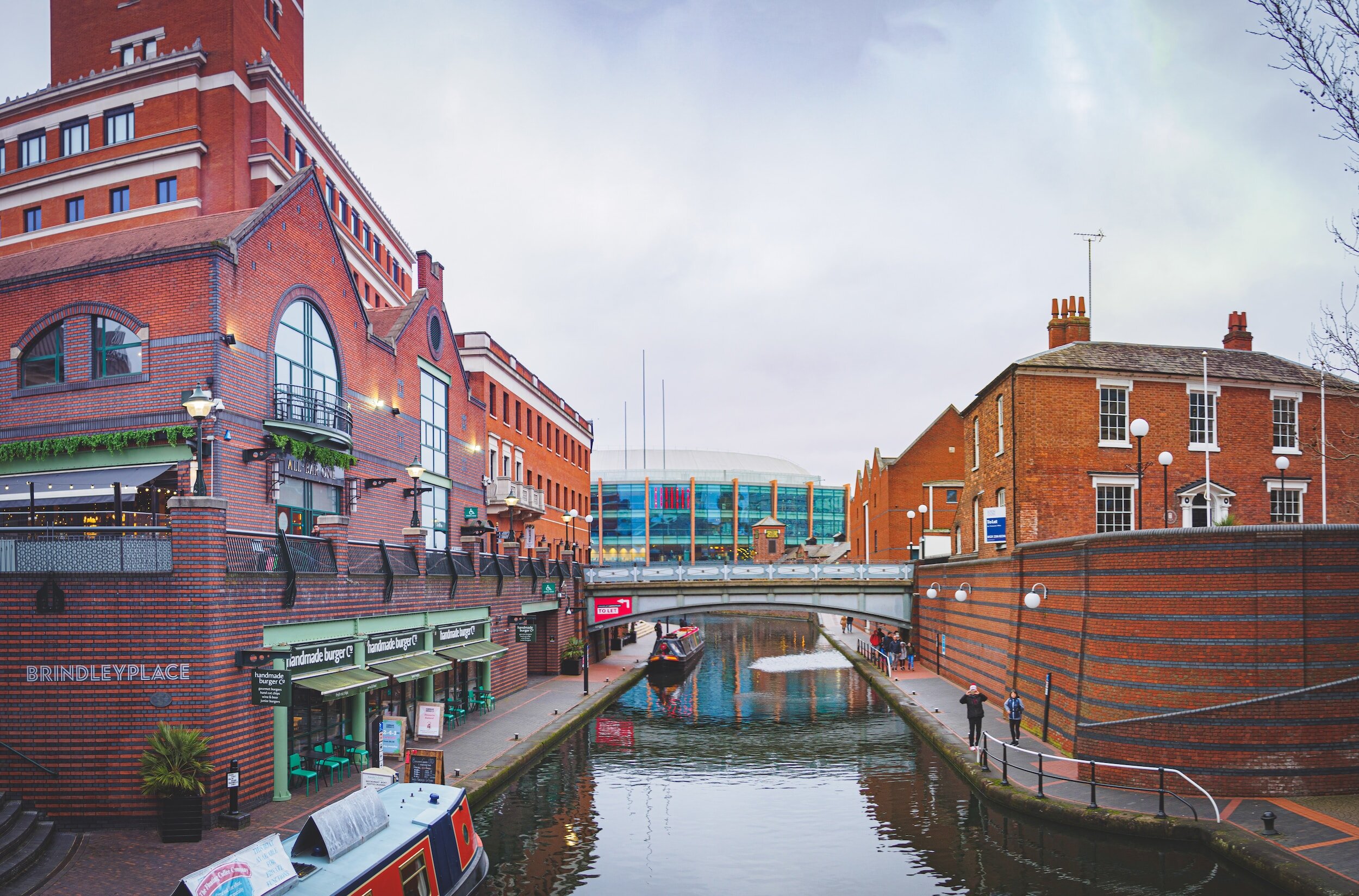
So Dear Old Brum has gone bust. At which point there are those crying out that the assets must not be sold:
“As the process of balancing the council’s books begins, local communities are rightly concerned about the fate of publicly owned historic places and buildings and arts and culture venues,” the letter states. “Birmingham’s financial reconstruction must not come at the cost of its priceless heritage.”
The letter lists sites including the Birmingham Museum and Art Gallery, Aston Hall, Moseley Road Baths, Symphony Hall and Cannon Hill Park as “precious, publicly owned places” that should be saved.
Neil Mendoza, the chair of Historic England, said: “Cultural and heritage assets are incredibly precious and important parts of communities. They’re not things to be bought and sold.
“This is a serious situation, and heritage and community considerations need to be taken into account as well as the obvious legal ones. People in Birmingham are really upset at the idea these things might even be considered as assets to be sold.”
They are assets and it should be considered, that sale of them. It’s entirely possible that the sale doesn’t make sense, just as it is possible it does.
But the point we want to emphasise, insist upon, is that selling an asset does not mean destroying that asset. That, say, Moseley Road Baths is privately, not council, owned does not make Moseley Road Baths disappear. It just changes who owns the place.
This is, to us, part of a larger mistake more generally made. We often hear of demands to “save an iconic company” when what is meant is to save the particular and current legal form of it. The underlying economic asserts do not cease to exist if a particular legal wrapper goes bust. What changes in bankruptcy is who owns those assets, not the existence of the assets themselves.
That is, don’t get hung up on the legal or form of ownership. The things themselves, sure, they might well be worth saving. Or not, as the case might be. But the form of ownership, or even who owns, isn’t the thing that must necessarily be preserved. That’s to reify the current legal arrangement which is an absurdity. Even if we do want to save the thing itself it’s the thing that is to be considered, not the who or how.

Well, George Monbiot is right here
On the subject of HS2:
In 2010, when a high-speed rail line from London to the north – HS2 – was proposed by the outgoing Labour government, I wrote an article arguing that the numbers didn’t add up. The environmental benefits had been inflated by a series of blatant accounting tricks and concocted figures. What the government called the “business case” for the scheme was in fact a cost-benefit analysis, in which the supposed economic benefits had been amplified by outright assaults on common sense. The case for HS2 always was a baggage train of bullshit.
After reading all available documents and finding no justifications for the assumptions the Department for Transport had made, I pressed it for an explanation. After a flurry of panicked phone calls, it eventually told me there was a model for justifying its analysis, but this was “frightfully complicated”. It did not volunteer to send me a copy. The books, it seemed to me, were cooked – thoroughly and fatally.
Well, one of us did read the cost benefit analysis and as we pointed out here, it didn’t pass the most basic CBA tests. And let’s be honest about it, if your economic argument is such that even George Monbiot can see through it then you’ve not got a strong case.
But as ever with George he doesn’t grasp how right he is. He identifies a larger problem from this:
I think it is one instance of the endemic disease that plagues this country, a disease that withstands changes of government, democratic scrutiny and the Tories’ austerity programmes. It’s a disease whose name everyone knows in Brazil, where I used to work and learned my politics. But it is seldom diagnosed here, though it seems just as prevalent. Clientelism.
Yep, we’re fine with that. Not with it happening, but with the identification.
The favours can be widely distributed: a government might buy the votes of a particular interest group with pre-election handouts. Or, in the case of elite clientelism, they can be targeted at a few key players.
Yes, quite so.
Which is, of course, the case for small government neoliberalism. Sure, we all agree that there are some things that must be done and that also only government can do. But we should - must - limit government only to those things which meet both tests. Because government - in any form of democracy, another valuable idea - is going to be run by politicians. Whose interest is always going to be gaining those who will vote for them.
That’s exactly the clientelism George is complaining about - state money, taxpayer’s money, being spent upon buying votes. Could be unions with promises of higher pay, bureaucrats with more clipboards to carry, grifters wanting to build something without value for money checks, possibly even greenies who want renewables at thrice the costs of fossil fuels. But that’s what the game is, deploying that 45% of the economy that the state commands in order to buy votes for those doing the deploying. Clientelism.
This is not exactly new, panem et circenses as political advice is a couple of millennia old by now.
The reason we mention this at length is that Monbiot has shown himself, at times, to be amenable to reason and evidence. We therefore still nurture that hope - extreme as it is - that we can get him over to that side of righteous small government liberalism before too long. As anyone motivated by reason and evidence does become. For just look at what government does when given free rein.

How to deal with the world changing
We could we suppose, have some vast army of people - call them GOSPLAN just for fun - who then tell us all what to do, in detail, when something out there changes. Or, well, we could just leave things be perhaps?
Meta, the owner of Facebook, has paid £149 million to surrender lease on a London office block having not moved in any staff two years after signing the deal.
Oh well, made a mistake, loses money and there we are.
Britain’s return to the office has stalled this year, with occupancy levels averaging about 30 per cent, according to data from Remit Consulting — about half the levels before the pandemic.
Given the record shortage of lab space in the UK, British Land is unlikely to have trouble finding a life sciences tenant. Analysts at BNP Paribas Exane estimate that the landlord may even be able to achieve 50 per cent more rent than it was due under the lease to Meta.
Asset unwanted in its current form is to be transformed into a more valuable asset. The very definition of increasing wealth - moving economic assets from lower to higher valued uses.
Seems like a system that works. No bureaucratic direction or plan, just prices coordinating behaviour.
As we say, it’s a system that seems to work. Possibly we could even use it elsewhere as well. Say, that shocking oversupply of high street shops that could be turned into more valuable housing? Or those vast expanses of Green Belt that could be turned into more valuable housing?
After all, we have just proven that the free market does move property to higher value uses, haven’t we.