
Blog RSS

The Pin Factory Blog

"Little else is requisite to carry a state to the highest degree of opulence from the lowest barbarism, but peace, easy taxes, and a tolerable administration of justice" - Adam Smith

Illegal everything

Written by Sam Bowman | Tuesday 14 August 2012

I'm away in Ireland at the moment, but I enjoyed watching this video last night and thought readers of the blog might too. It's a surprising look into the American regulatory state, with plenty of points that will be (sadly) familiar to viewers on this side of the Atlantic as well. (Quite a few of the points are also rather surprising to see on Fox News — in a funny way it's quite a subversive film.)

View comments

In praise of packaging

Written by Dr Madsen Pirie | Monday 13 August 2012

The proposal to require 'plain' packaging for tobacco products has now completed its consultations.  The ASI submitted evidence against plain packaging, and we published Chris Snowdon's report on the subject.

The case for plain packaging is weak since it has not been tried anywhere.  Proponents claim that glitzy packaging leads people to take up smoking, whereas the tobacco companies say it is about promoting their brands over others.  Supporters cite tests in which subjects said they felt 'negative' about cigarettes in plain packs.  I myself would feel pretty negative about having to look at other people's packs showing tumours and corpses.

Counterfeiting and smuggling would be easier with plain packaging, reducing tax revenues.  Already one cigarette in nine is smuggled or fake.  The civil liberties issue makes a strong case against plain packaging.  Although proponents tell us that it will only apply to tobacco products, activists in Australia, which took the lead in plain packaging laws, are now campaigning for graphic warnings on alcohol and for what they deem to be 'junk' food to be sold in generic packaging.

Packaging can influence choice of brand by projecting an image that users want to identify with.  The feelings that go with a product are part of the intangible value that it adds.  Malt whisky in India is seen as an 'aspirational' product associated with success and ambition.  Young Indians enjoy feeling part of that world, in addition to enjoying the whisky itself.  Similarly tobacco companies like to project an image for their brands.  Friends of mine who started Regius Cigars wanted to convey an image of top quality, and designed distinctive packaging in black and gold.  Plain packaging would require them to forego the distinctive imagery that marks out their brand and gives it class.

I applaud the New World vintners for the innovative and bold wine labels they have adopted.  They brighten up the table, and I doubt they make people drink more wine.  I do think that putting disgusting pictures on them would make people 'negative' toward them, however.

It would be a duller world if everything activists thought bad for us had to be sold in plain packaging.  It would be less informative, and would deny us the intangible pleasures of associating with images and lifestyles we aspire to be part of.  It would be a drabber world and one considerably less free.

View comments

The problem with relative poverty

Written by Tim Worstall | Sunday 12 August 2012

Here actually is the problem with using relative poverty as a measure:

Compared to the 1960s, China today has higher income inequality,
but also incomparably lower levels of material poverty. By Brady’s
definition, China was less impoverished in the near-starvation years
of the 1960s than it is as an economic superpower today. According to
the OECD, during the last three decades the share of Chinese living
in absolute poverty dramatically declined from eight in ten to one in
ten (Garroway and de Laiglesia 2011). During the same period, relative
poverty, measured exactly as Brady measures it, roughly doubled.
Although inequality and relative poverty are not irrelevant for measuring
the well-being of a society, we should be apprehensive about a measure
of poverty that is incapable of detecting the largest decline in material
poverty in human history.

As pointed out, a measure of poverrty that not just ignores, but actually gets the sign wrong on, the largest reduction in poverty in the history of our species is of limited value.

Not of no value: as Adam Smith's linen shirt example shows. If you can't afford a linen shirt, but not being able to afford a linen shirt marks you out as being poor, then in that society you are poor if you cannot afford a linen shirt. But as our Chinese example shows only worrying about relative poverty is simply nuts.

Which leads us to something of a conclusion: it's fine to consider the distribution of incomes within a society. But we do it rather too much with the constant political obsession over relative poverty. We need to be paying a lot more attention to absolute standards of living: most especially how these change over time. Most specifically I'm thinking about the effects attempts to reduce relative poverty might affect our ability to increase absolute standards of living in the future.

For as ever in economics there is actually no solution. There are only a series of trade offs. We could, obviously, confiscate all of everyone's money and share it out equally. This is not going to make our children richer than ourselves equally obviously. Similarly, no one at all is suggesting that there should be no taxation at all to aid the lame and the halt of our society even if that might increase future growth rates. It's a matter of balance and to my mind there's much too much attention being paid to the relative part and not enough on the absolute incomes of the future.

View comments

We can't be beaten by Americans: we should go much further than this

Written by Tim Worstall | Saturday 11 August 2012

The White House has just announced:

To fulfill its functions, the federal government asks people to fill out a lot of forms. To get permits and licenses, to pay taxes, and to qualify for benefits and grants, forms are often required. Too often, however, those forms are too confusing and complicated, especially for individuals and small businesses.  Today we are doing something about that problem.

From now on, agencies will be asked to test complex or lengthy forms in advance, by seeing if people can actually understand them. Advance testing can take many forms. Agencies might use focus groups. They might use web-based experiments. They might try in-person observations of how users understand the forms.  From those tests, agencies will be better able to identify the likely burdens on members of the public and to find ways to increase simplification and ease of comprehension. 

We cannot let ourselves be beaten by such a group of rebellious colonials of course.

There's also a story rolling around my memory of Maggie, when in Number 10, insisting that she should try out the draft census form. As a result of which at least one question was dropped for being far too invasive. I would suggest that we build upon that precedent in order to beat those Yanks.

Any and every form that is issued for us hoi polloi to fill out must first be tried out on the relevant Minister (with local councils, the mayor, lead councillor, whatever, and so on through the ranks). No help from officials, no phoning a friend. Just the form and the proposed guidance notes in a locked office. Any form which cannot be so completed must and will be rejected as an imposition upon the populace.

The procedure will not happen once. It is something that will be repeated by every minister upon taking office: yea even if they're just moving around in the same department. Quite apart from anything else I cannot think of a better way for a politician to find out what it is that government actually does.

Now it is true, given the intellectual capacity of all many some most (choose your favourite here) who achieve high office, that we'll end up with a series of forms which can only be completed in thick crayon in words of one syllable. But that's fine: it all takes us a step closer to the paradise that Sir John Cowperthwaite enforced in Hong Kong. He refused to allow anyone to collect economics statistics like GDP on the grounds that if they were known then some damn fool would only have the impertinence to try and do something about them.

For here is the real point about all of this. It is right and proper that there is open government for we most assuredly should know what it is that they are doing to us with our money. But they should know little to nothing about us and what we do for we're free people in a free land and therefore it's absolutely none of their damn business how we decide to spend our lives.


View comments

Gentlemen, kickstart your engines

Written by Sam Bowman | Friday 10 August 2012

Tim Worstall, no stranger to these parts (and author of probably the best blog in the UK blogosphere), is using Kickstarter to generate support for his next book, ‘How to Create a Liberal America’. As you’d expect from Tim, it’s a very smart idea: he wants to outline the sort of regulatory regime the US would need to have a ‘Swedish’ system – in other words, a fairly redistributive but also fairly unregulated, free market economic system.

That’s exactly the sort of argument that I’d like to see more libertarians making – yes, high taxes are bad, but the real meat is in looking at how the regulatory state holds back wealth creation at every turn. Political debate has settled along the redistributive divide: if you want quite a lot of wealth redistribution, you’re a lefty, if you want quite a bit less wealth redistribution, you’re a righty. That’s a shame – as Tim will hopefully be getting a chance to argue, there’s no reason you couldn’t pair a deregulated, dynamic free market with a fairly redistributive state that gives quite a lot of money to people at the bottom of society.

Kickstarter itself is a great idea. For those who don’t know it, you pledge a certain amount of money in order to get a certain project off the ground – but you only pay if the goal is reached. It's a great idea and gets around a lot of public goods and internet piracy problems.

Here’s an example: Suppose internet piracy means that the next Adele album isn’t profitable to make and then sell, even though she has lots of fans who would be willing to pay if they didn’t have the piracy option. A Kickstarter-like project could allow Adele to say, alright, the cost of making the album (including the earnings I want to make it) is around £1 million. Like Tim Worstall, she might have a few different tiers of support – if you pledge £20, you’ll receive the album once it’s made; if you pledge £50, you’ll get this free t-shirt as well; and so on.

The big advantage here is that people will really be paying for the album to exist – piracy, at this point, isn’t an option. Yes, you will still have free riders but, as with other public goods, free riders aren’t a problem if enough people are willing to pay for something to exist. (Consider how many privately-funded charities and public monuments exist.) It’s true that Adele probably won’t earn as much from this as she might have fifteen years ago, but if she’s earning enough to make the product and benefit society, who cares?

You can imagine a similar scheme for lots of other public goods that we usually imagine that only government can provide, like street lighting. And sites like this can bring out the best in people: here's a project on a similar site to raise money to rebuild a mosque that was burned down in America — it's raised $260,000 in just sixty hours.

Head on over to the Kickstarter page to read more about Tim’s project. I've backed it — now let’s hope it gets off the ground.

View comments

Let the market decide what happens to Libor

Written by Dr Eamonn Butler | Friday 10 August 2012

In a speech today, the head of the new Financial Conduct Authority (FCA), Martin Wheatley, will say that the structure and governance of Libor – the interest rate at which Britain's banks agree to lend to each other – is 'no longer fit for purpose and reform is needed'.

Nonsense. Libor works perfectly well. Like any other system, of course, it can be undermined by fraud – people deliberately trying to manipulate it in order to benefit themselves or their organisation. And as in any other system, the way to deal with that is to prosecute the wrongdoers for fraud. A few people facing fines or imprisonment for such misdeeds then encourages the others to guard their own probity.

And in the case of Libor, such prosecutions should not stop at the foot-soldiers who deliberately misrepresented their own banks' credit status to get better terms. They should include any executives who connived in the fraud – and indeed any officials in government and regulatory agencies who deliberately encouraged such misrepresentations. And indeed any politicians who might have given orders to do so.

Getting Libor right is important, because it is a key market indicator of how sound people believe our banks are. It might well suit politicians, officials and bank executives to suggest that things are rosier than they are, but that remains a deception and must be prosecuted as such.

Tearing up Libor would have further consequences, because so much financial business, so many financial products in wide circulation, are priced in line with it. And what would 'reform' involve. I can see it now: some panel of bureaucrats from a new and untested regulatory authority, collecting vast amounts of information from the banks (at huge expense), and pretending to sift through it all, from day to day, in order to establish some 'objective' borrowing rate. But I don't think that bureaucrats would be any better at that than they would be at deciding the price of strawberry ice-cream.

Politicians and officials, through more of a decade of over-borrowing, keeping interest rates too low, printing money and doing anything else they could think of to create an apparent boom, in fact created a fantasy land in which everyone – home-owners, borrowers, consumers and indeed bankers – did some pretty stupid things. Not surprisingly, people tried to blag their way out of trouble.

When that blagging turns into deliberate misrepresentation, which could create real financial losses for millions of ordinary holders of loans and pensions, that is fraud and should be treated as such. You need to go back to the root causes of the problem, and to make sure that politicians and officials no longer have the power to debauch our currency and abuse the public finances, and also to prosecute anyone who, even in such a fantasy world, engaged in straight fraud. What you certainly do not want is to replace markets with bureaucrats.

View comments

A problem solved

Written by Dr Madsen Pirie | Friday 10 August 2012

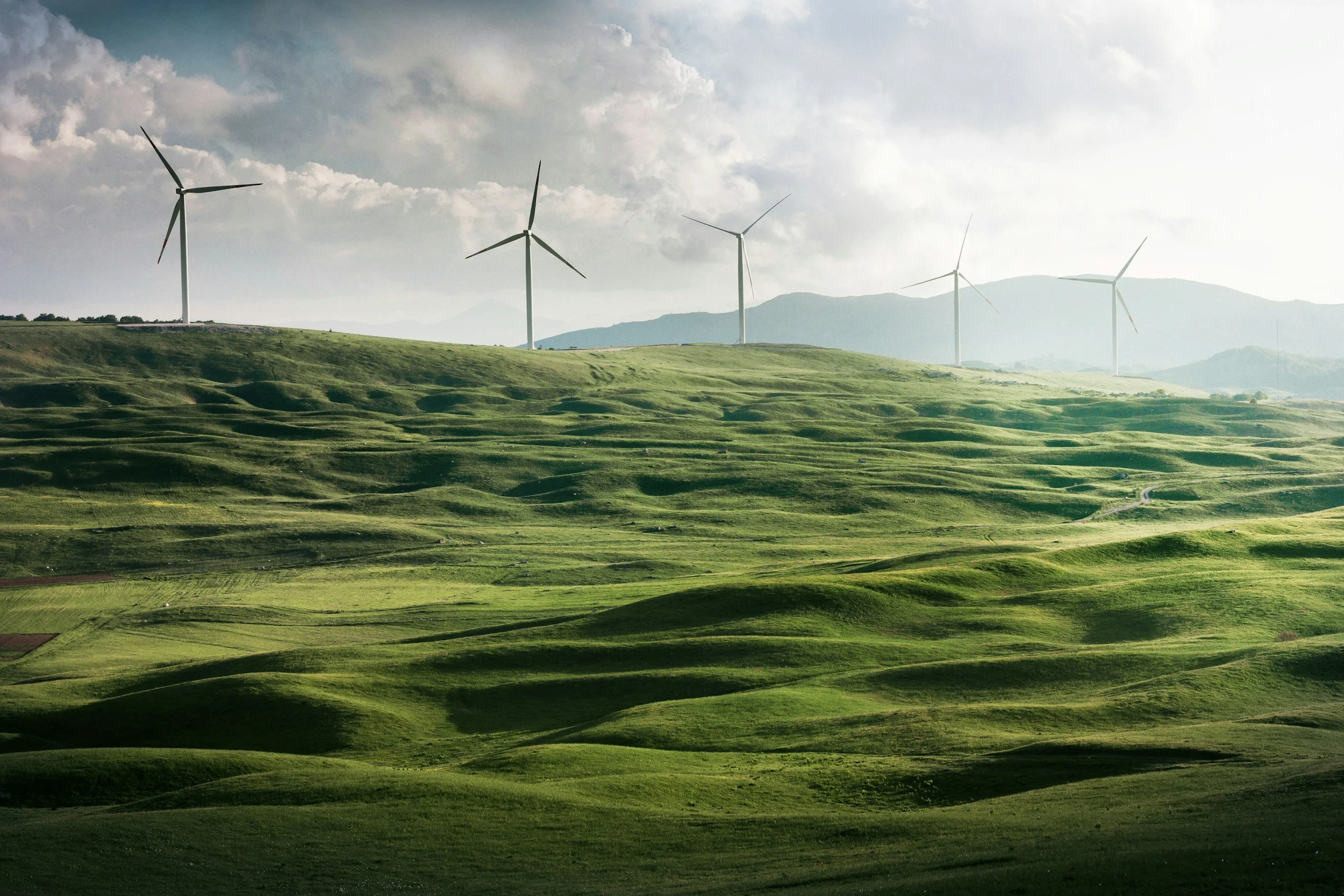
The world's energy problem seems to have been solved, but governments do not  seem to have noticed.  A relatively clean and abundant source of energy has not been produced by wind, solar or tidal power, nor even by nuclear power.  It has certainly not come from bio-fuels that create less energy than they use.  It has been solved by human ingenuity and technology.

The world has suddenly uncovered vast reserved of natural gas, largely because advances in horizontal drilling and hydraulic fracturing (fracking) technology have enabled it to be extracted from shale deposits previous thought undrillable.  The price of gas in the US has dropped to less than a quarter of its 2008 level (down from $13 per million BTUs to about $3).

Gas is still a fossil fuel, but the reserves of it are already estimated to last for 100 years, and possibly 200 years.  Ongoing technology will by then almost certainly develop new and low-cost alternatives to replace it.  Furthermore, gas is relatively clean, putting out less pollution and carbon emissions than coal or oil.  Gas-fired power stations will give us a cheap, relatively clean supply of electricity for many years to come to power our factories, our transport and our homes.

Gas is not renewable, and does not need to be.  Renewable energy is only desirable when energy is in short supply, and the gas revolution means that it no longer is.  Governments which have succumbed to environmental lobbies to subsidize wind farms and solar power generation will find they have unnecessarily increased energy costs to their citizens and their businesses, as well as disfiguring their countrysides.

Gas has the additional advantage that its reserves are not located in politically volatile or hostile parts of the world.  It will free the developed countries from dependence on Middle Eastern or Russian energy supplies.  The US will soon be self-sufficient in energy and become a net exporter, and even Britain could be.

Environmentalist organizations will lobby hard against it, citing all kinds of reasons for opposing it, but the main reason is the political one that it does not require changes in our behaviour, or the requirement to live more simply.  We can instead continue to develop new opportunities, and the lower cost of energy will free resources to make its use cleaner still.

The energy problem has been solved, and someone should at some stage tell this to governments so that their behaviour might change.

View comments

The story of Yeru Anka

Written by Jokesmith | Thursday 09 August 2012

Paul Anka is remembered for hit singles including Diana, and for writing the words of My Way.  His brother David, though less well known, had a distinguished career as a development economist.  He advised African countries on import substitution and tariff barriers, and was known as 'Yeru' (wise leader) by the African recipients of his help. 

Although long retired, his legacy still survives.  Even today when development economists advise on import substitution and tariff barriers, the Africans will crowd round, chanting the name of their former 'wise leader.'  "Yeru Anka!" they shout, "Yeru Anka!

View comments

The free education dilemma

Written by Dr Eamonn Butler | Thursday 09 August 2012

A friend of mine, a committed Christian, sent me this story about how taxpayer dollars are being used to teach kids in Louisiana all sorts of wacky things. America's 'voucher schools' – rather like Britain's new Academies and Free Schools – manage themselves, though the cost of the education they provide is subsidised by taxpayers. The aim is to give parents choice and the benefits of real competition between independent school providers, while making sure that every child has access to education, no matter how rich or poor their parents might be.

A noble ambition. But what happens if schools teach creationism, say? Or for that matter, promote Islamic fundamentalism? Denmark, which has had the same sort of private-provision/public-finance model for decades, used to have so-called 'Red' schools, which promoted socialist thinking. Are such things a legitimate use of taxpayer cash, however much the parents in question might actively seek out schools teaching such stuff?

It's an interesting problem. The libertarian view would be that the state shouldn't be involved in education at all. Education departments in Britain and America, certainly – and probably in most other countries – have not added at all to the quality of education, nor to children's access to it, say libertarians. Most kids got a good education long before the state got involved. Parents in Africa on just a few dollars a day make sacrifices to send their kids to 'penny schools' and consider it a good investment – as Professor James Tooley has documented in great detail.

At the other end of the spectrum, look at the disaster of state-financed and state-produced education. It was this model, in the postwar years, that brought us the so-called 'progressive' approach that was so ashamed of what it produced that it did not even publish examination scores – so parents had no way of knowing what state schools were actually doing for their children, if anything. They were expected just to pay up through taxation and let the 'experts' get on with whatever they were doing to their kids. And later, in Britain, we had the utter inanities of the National Curriculum, in which the country's history and culture barely got a look in.

The idea of voucher and quasi-voucher schemes is precisely to break down that kind of state monopoly in eduction. It's reckoned that you cannot do everything at once: so let's free up the supply of schooling first, while still maintaining the guarantee of state support so that nobody is left out. It is actually that model, first introduced in Britain by Mrs Thatcher's government, that brought us the National Curriculum just mentioned. The view was that if taxpayers' money is being used, then the authorities have a right to make sure that it is spent properly. Unfortunately, when you leave it to state providers and state-employed education experts to decide what a 'proper' education is, well, you get a very silly answer.

So should we just leave it for parents to decide? This is probably the leading market-economics answer. Even if the state is paying, so the reasoning goes, parents will tend to make sensible choices for their children, whom they want to succeed. They are not going to choose schools that paddle their kids into some intellectual backwater. And so, like any other competitive market, you will get standards being bid up, and the quality of schooling will improve.

Except that actually, many parents would indeed like their children to be paddled up the backwater. Some fundamentalist families may not wish to see their female offspring learn too much. Others may deeply believe the creationist paradigm and want their children to share it. Some might believe that the Western values that give them the choice of what to learn are fundamentally wicked, and that their children should learn to hate them.

So should the state insist that taxpayers' money should not be spent on such things? To override the wishes of parents is to say that some state 'experts' should decide. And we know where that leads us. So it is not an easy question. On balance, I would say yes, parents should decide; I have faith that the overwhelming majority will make sensible decisions for their children. Better choices, on balance, than the professional state educationalists have made over the last half century.

View comments

The lottery and the Olympics

Written by Dr Madsen Pirie | Thursday 09 August 2012

Some oppose the cost to public funds of the Olympics, and some criticize the inconveniences to which Londoners have been subjected.  There can be few, however, who deny credit for the superb performances of our athletes.  They have shown a dedication and commitment that has rallied most of the nation behind them in their efforts, and given them generous praise for their achievements.

That so small a nation can do so well is remarkable, and many commentators, including Lords Coe and Moynihan, have praised the role of the National Lottery in this.  The Adam Smith Institute is proud of the role it played.  In 1990 we invited the orchestra conductor, Denis Vaughan, who had suggested the idea, to write a paper for us setting out the case.  Within two years of that publication, the National Lottery bill had cleared Parliament, with credit to Sir John  Major and Virginia Bottomley for the role they played.

The lottery is voluntary. No-one has to buy a ticket, and those who do can dream of the chances of winning millions. Funds are raised that taxpayers might not be prepared to give.

The distribution of lottery receipts has been remarkable.  Of every £1 spent on tickets, 50p has gone into the prize fund.  Of the remaining 50p, 28p is assigned to good causes, 12p in government duty, 5p to retailers as commission, and 4.5p in operating costs to Camelot, and 0.5p as their profit.  It returns to good causes a higher proportion of each £1 than any other official lottery.  It is reckoned to have increased funding for the arts and sport sevenfold. 

Perhaps too much lottery money has gone to support institutions such as the Royal Opera House, where more might have been given to local arts ventures, repertory companies and youth orchestras, but large numbers of people on modest  incomes have benefitted from the support it has given to sports activities.  Lottery funding has enabled athletes to undertake full-time training in preparation, to attract top-ranking international coaches, and to train in the world-class facilities that it funded.

The pay-off achieved by our athletes at the Beijing Olympics and even more in London is the reward for a bold idea well executed.  The arts, medical and other charities have been aided by the National Lottery as well, but the Olympics highlights the difference it has made to sport.  And every penny is raises is freely given.

View comments

Pages

About the Institute

The Adam Smith Institute is the UK’s leading libertarian think tank...

Read more