
Adam Smith: The Conversation Continues
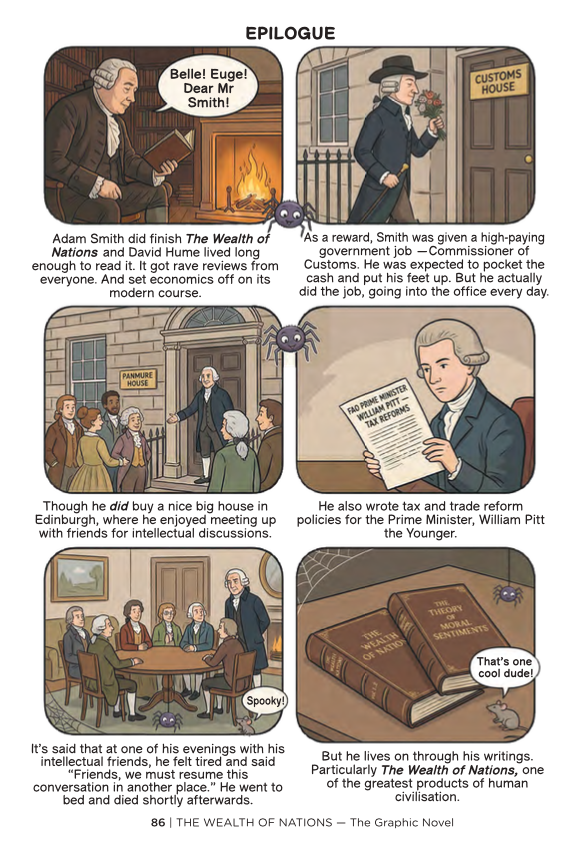
On July 17, 1790, Adam Smith, the father modern economics, died quietly at home in Edinburgh. His life had been one of profound scholarship, quiet determination, and public service.
Smith’s masterpiece, The Wealth of Nations, was published 250 years ago, in 1776. He had laboured over it for years, refining his ideas on free markets, specialisation and the invisible hand. His friend David Hume—another great Scottish Enlightenment thinker—lived just long enough to read it Ever the witty skeptic, Home both teased and praised Smith, offering the kind of warm, incisive feedback only a true intellectual companion could provide.
In recognition of his ground-breaking contribution, Smith was appointed Commissioner of Customs. The position came with a comfortable salary of £600 per year—in addition to the £300 he already received from his student the Duke of Buccleugh—a handsome income for the time. Far from treating the job as a sinecure, Smith threw himself into practical reform. He streamlined tax administration, eliminated inefficient duties, and helped shape fiscal policy. He even drafted key tax recommendations for Prime Minister William Pitt the Younger, influencing Britain’s economic direction over the next century.
At Smith’s house in Edinburgh’s Canongate, he hosted lively intellectual gatherings of friends, students, and fellow thinkers, continuing the vibrant intellectual life that defined the Scottish Enlightenment. It is said that at one of these events, he felt unwell, rose, and declared that: "We must resume this conversation in another place.” He died shortly after.
But Smith’s ideas remain vibrantly alive. They continue to shape global economic policy debates and our understanding of prosperity. And those ideas—and the man himself— come vividly to life in my new graphic novel of The Wealth of Nations. The conversation continues.
Eamonn Butler