
Degrowth makes us all poorer
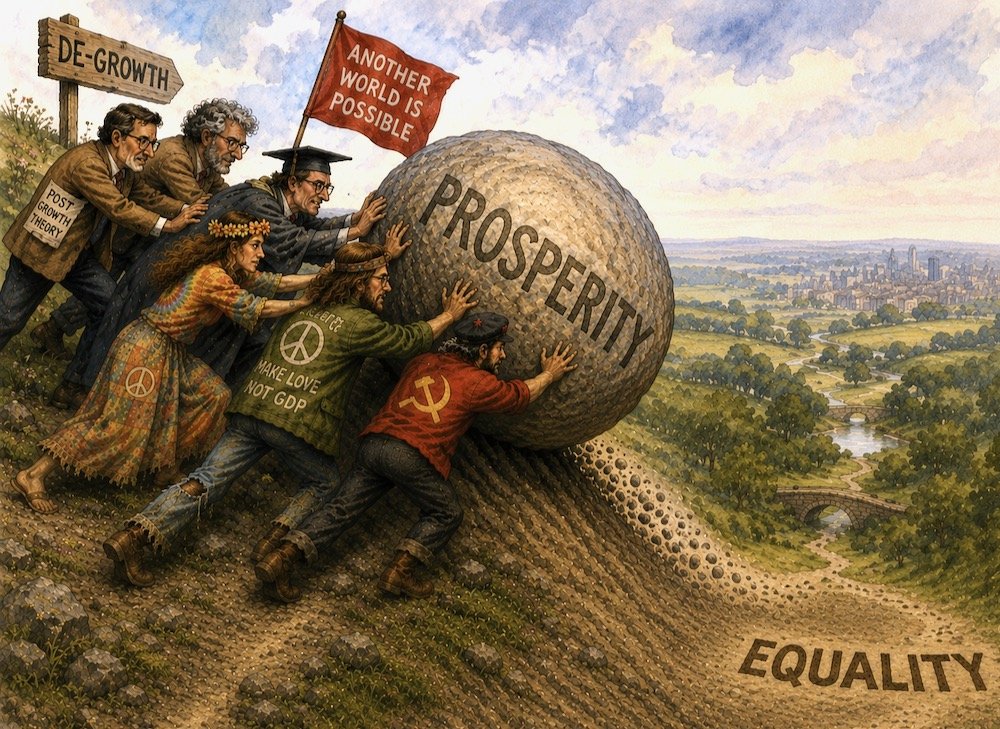
Degrowth is an academic and social movement advocating the planned, democratic downsizing of production and consumption in wealthy nations. It aims to reduce ecological footprints and environmental degradation while improving human well-being, shifting societal priorities away from GDP growth and toward equity, sustainability, and social health
Some advocates point out that GDP is a poor measure. It goes up when we clear up oil spills, when divorce lawyers are busy, when people buy fast food because they're too stressed to cook. Some critics argue we should pursue better-measured human flourishing, not growth for its own sake. This is a respectable if contested position, though it faces immense practical difficulty in determining what measures well-being and happiness.
A related strand worries about specific externalities, principally carbon and biodiversity loss, and argues the market is mispricing them. This is not an anti-growth ideology as such. Rather it is an argument that markets need correcting to internalize costs they are currently ignoring. Classical liberals can engage with this seriously even if they dispute the proposed remedies.
There is an aesthetic and romantic tradition, a very old strand of thought predating socialism, and going back through Ruskin and Morris to Romantic-era reactions against industrialization. It simply finds modernity ugly, hurried, and spiritually depleting. Smallholding, craft, and seasonal eating have a genuine appeal to people who feel that modern life has lost something. This is not quite an argument, it is a sensibility which should not be dismissed. There are real questions about meaning and community in industrial modernity, but it tends to romanticize pre-industrial poverty selectively.
Institutional capture has boosted the degrowth movement because much of its language now comes from NGOs, international bodies, and academic departments that have strong incentives to find crises requiring their management. Once there are career structures, grant cycles, and institutional prestige built around a particular diagnosis, the diagnosis tends to reproduce itself. This can be understood as rational behaviour within perverse incentive structures.
There is a genuine misanthropic strain that regards human beings as a form of pollution of the natural world. A small but vocal current is genuinely anti-humanist, and views human economic activity as intrinsically destructive and population growth as a problem. This tradition runs from Paul Ehrlich through deep ecology to some corners of the contemporary rewilding movement. Here the ‘we would be poorer’ objection doesn't hold sway because, in their view, there should be fewer of us consuming less. This is a coherent position in its own terms, just one that most people find repugnant when stated plainly.
The common thread across most of these is not irrationality but different concerns about what matters, combined in some cases with motivated reasoning and status incentives. The romantic smallholder, the NGO professional, the wellbeing economist, and the deep ecologist all think they are proposing to improve things; they're weighting values differently from those that growth advocates hold, not hallucinating.
The sharper critique is that these movements consistently fail to engage with the empirical record and with reality itself. Material growth has done more to reduce poverty, extend life, and to free people from grinding toil than any pre-industrial arrangement ever managed. When advocates systematically ignore this evidence, this comes close to psychosis, beliefs maintained in the face of overwhelming evidence, rather than honest inquiry.