
The Anxious Generation - Mental Health Issues
New polling of 18-30s finds widespread self-reported mental-health issues, weak confidence in education, and a split outlook on Britain’s future.
As part of its Anxious Generation series, Adam Smith Insights has polled 18-30-year-olds on their views on mental health, education and their outlook on Britain’s future.
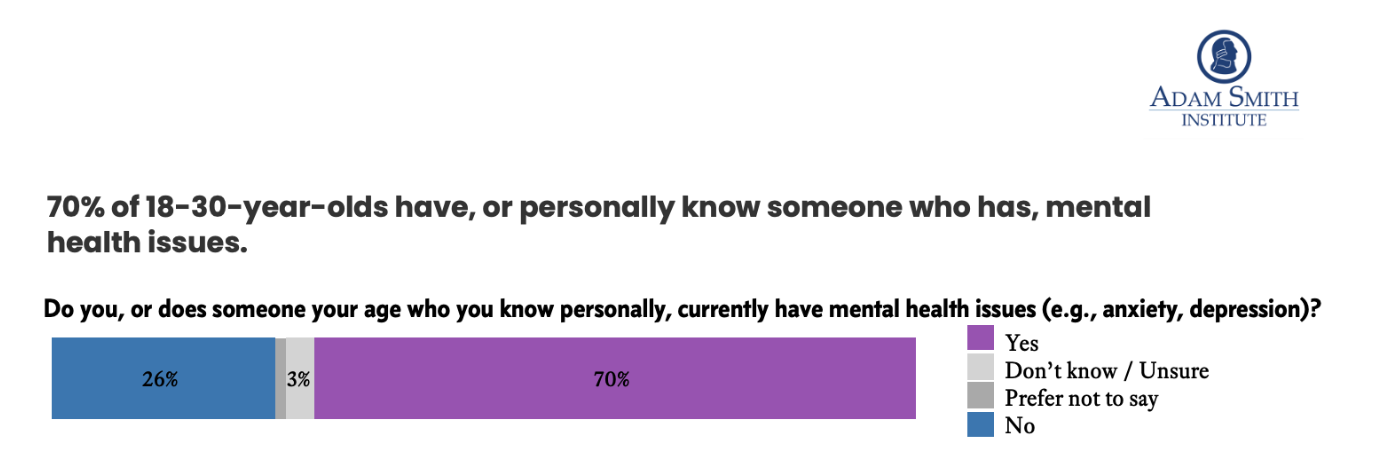
The nationally representative poll shows self-reported mental-health issues are widespread among young people. Seven in ten 18-30-year-olds say they currently have, or personally know someone their age who currently has, a mental-health issue. Only 26% report no such experience.
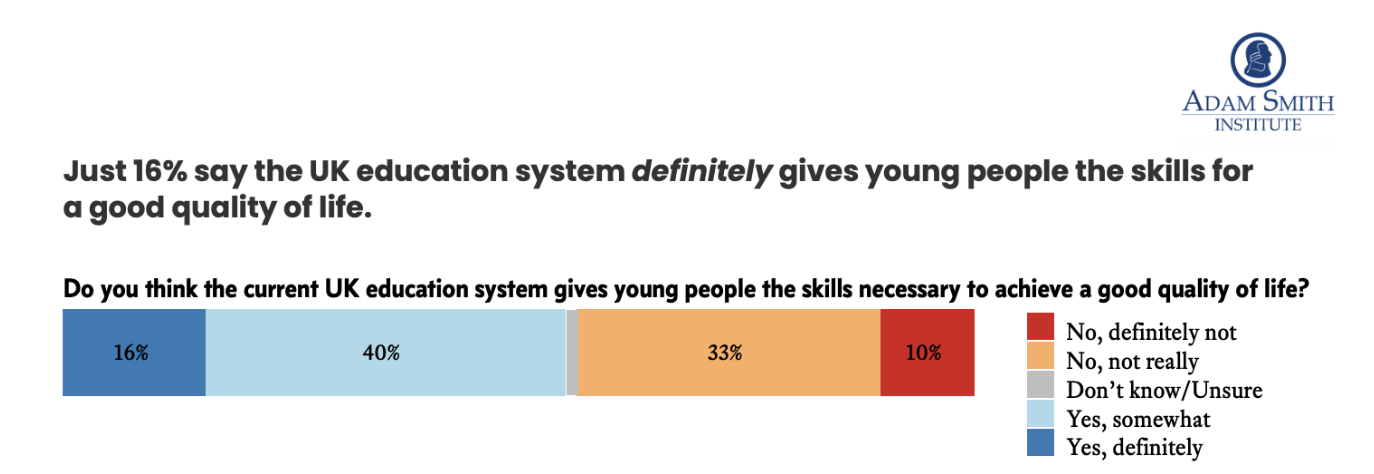
Meanwhile, confidence in the UK’s education system is fragile. Only 16% of young people - members of the population who have been to school recently - are confident that the education system in the UK equips young people with the skills needed to secure a good quality of life.
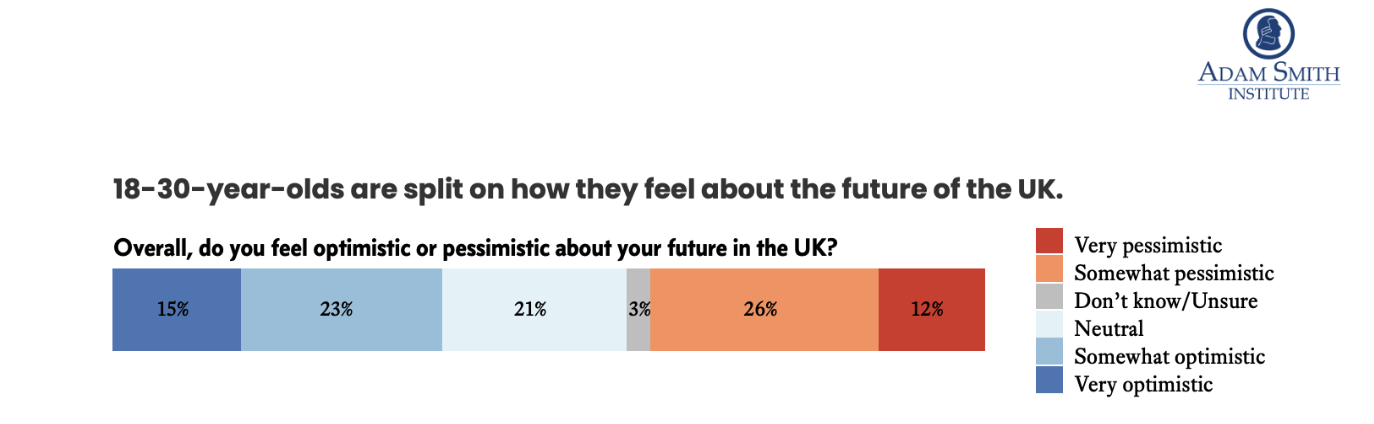
And when it comes to the future of the UK, Britain’s young adults are split down the middle. 38% are pessimistic (very or somewhat) while 38% are optimistic (very or somewhat), and 21% are neutral.
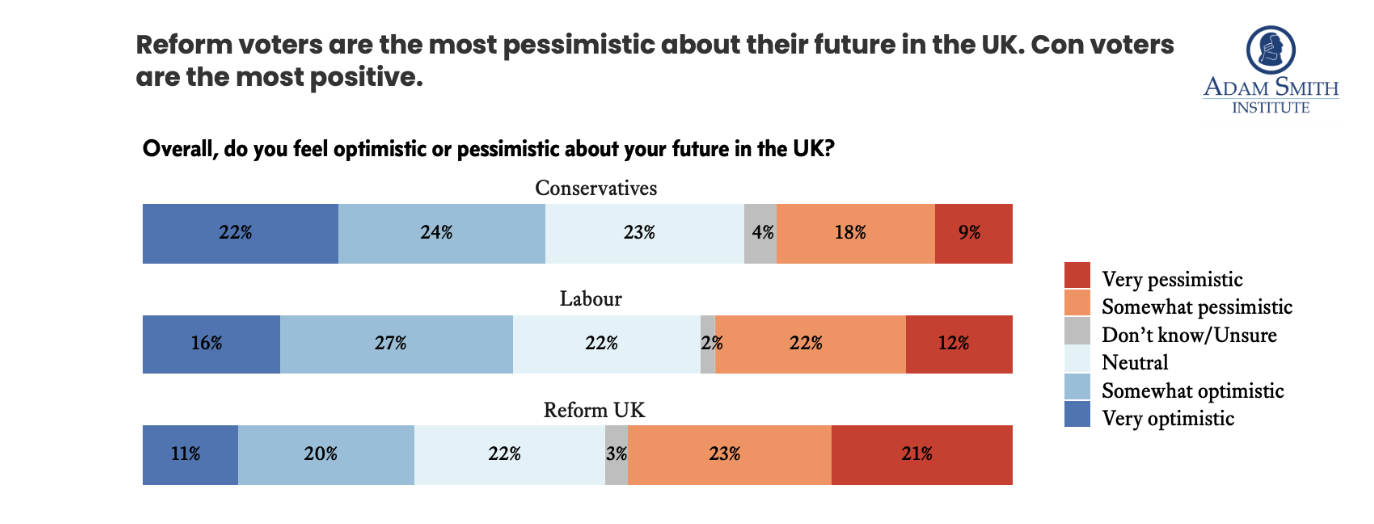
However, there are notable differences across parties, with Reform UK voters far more pessimistic than Conservative and Labour voters.
These findings indicate that self-reported mental health issues seem to be ubiquitous among young Britons. Feeling underprepared for life and divided over the country’s direction, this final round of polling paints a picture of a generation gripped by uncertainty.
KEY FINDINGS:
70% of 18-30 year olds have, or personally know someone who has, mental health issues.
Only 26% of 18-30 year olds say they have not had or known someone in their peer group who has mental health issues.
4% did not know or declined to answer.
Just 16% say the UK education system definitely gives young people the skills for a good quality of life.
56% say that it somewhat or definitely gives young people the skills for a good quality life.
43% of young people say it does “not really” or “definitely does not” give young people the skills necessary for a good quality life.
18-30 year olds are split on how they feel about the future of the UK.
38% are very pessimistic or somewhat pessimistic about the future of the UK
38% are very optimistic or somewhat optimistic about the future of the UK
21% are neutral.
Among the three major parties, Reform voters are the most pessimistic about the future of the UK. Conservative voters are the most positive.
46% of Conservative voters are very optimistic or somewhat optimistic about the future of the UK, while 27% are pessimistic or somewhat pessimistic.
Similarly, 43% of Labour voters are very optimistic or somewhat optimistic about the future of the UK, while 34% are very pessimistic or somewhat pessimistic.
Only 31% of Reform UK voters are very optimistic or somewhat optimistic about the future of the UK, while 44% are very pessimistic or somewhat pessimistic.
Across all three parties, nearly identical percentages of voters are neutral about the future of the UK (Con: 23% Lab: 22% Ref: 22%).
Methodology:
Adam Smith Insights ran a poll on behalf of its sister think tank, the Adam Smith Institute, of a nationally representative sample of GB adults:
Nationally representative poll of UK 18 - 30 year olds in the UK.
Poll conducted via online panels
Field dates 8 July – 10 July 2025
Sample size = 1338 people
Poll weighted to population targets to match GB 18-30 year old population profile across age, gender, region, ethnicity, and 2024 general election vote using ONS 2021 Census data, age-by-vote distributions derived from Ipsos’s post-election analysis: “How Britain voted in the 2024 election”, national vote share data from the Electoral Reform Society’s 2024 general election results, and YouGov/BES polling.
The poll results, with a median completion time of approximately 5 minutes, has a margin of error of ±2.7%.
Respondents were filtered for completion quality (e.g., straight-lining, speeding), and responses with incomplete or invalid data were excluded from analysis. No imputation was applied.
The Adam Smith Institute is one of the world’s leading think tanks. It is ranked first in the world among independent think tanks and as the best domestic and international economic policy think tank in the UK by the University of Pennsylvania. Independent, non-profit and non-partisan, the Institute is at the forefront of making the case for free markets and a free society, through education, research, publishing, and media outreach.
Adam Smith Insights is a new type of data and polling organisation, with a special focus on economics and policy change. Through analysis of public sentiment, we reshape what is politically possible. We help construct reforms which will be more popular and successful, while exposing the failings of our current system. Through a range of quantitative and qualitative methods, we equip policy makers with the right insights to shift the agenda and change reality. We operate globally, with data and analysis covering all regions.