
Britian’s Tax System Is Blocking The Builders
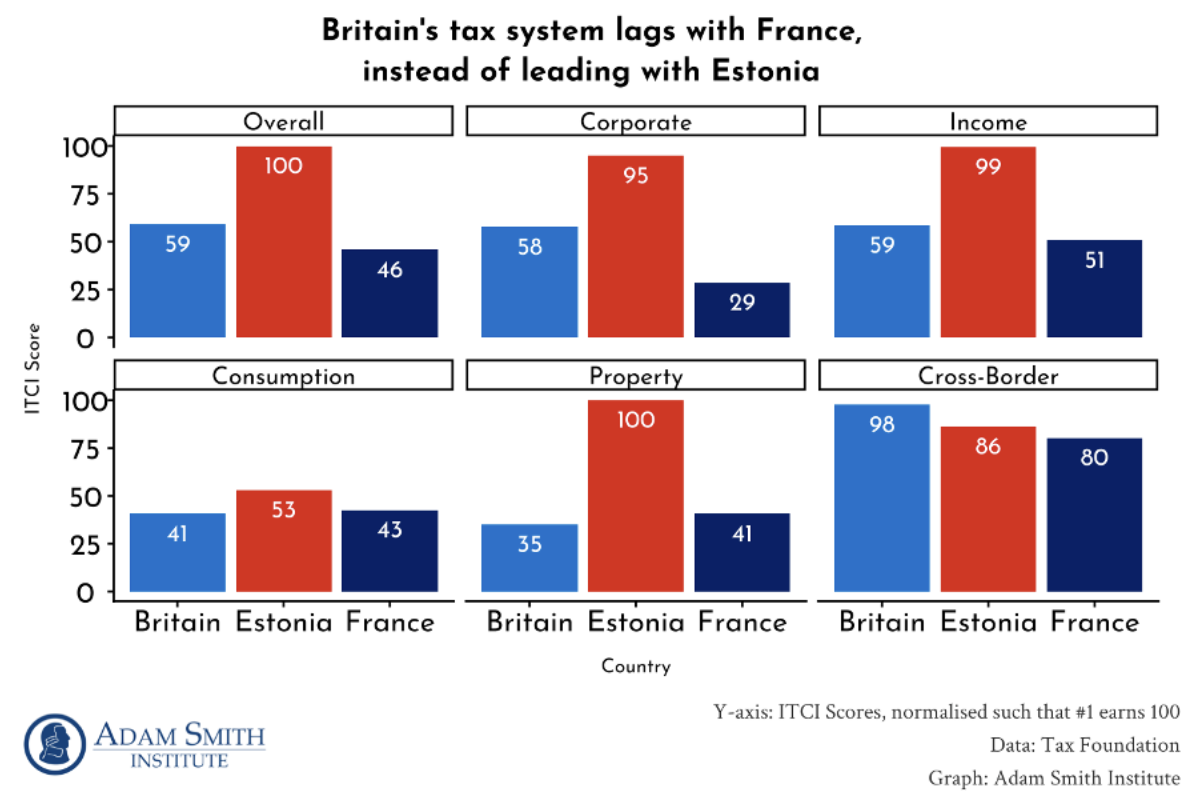
The Tax Foundation's latest International Tax Competitiveness Index exposes the flaws of Britain's tax system, placing it 32nd out of 38 OECD countries.
Property taxes are the worst-performing element, with the UK's ranking a dismal 37th, surpassed only by Italy.
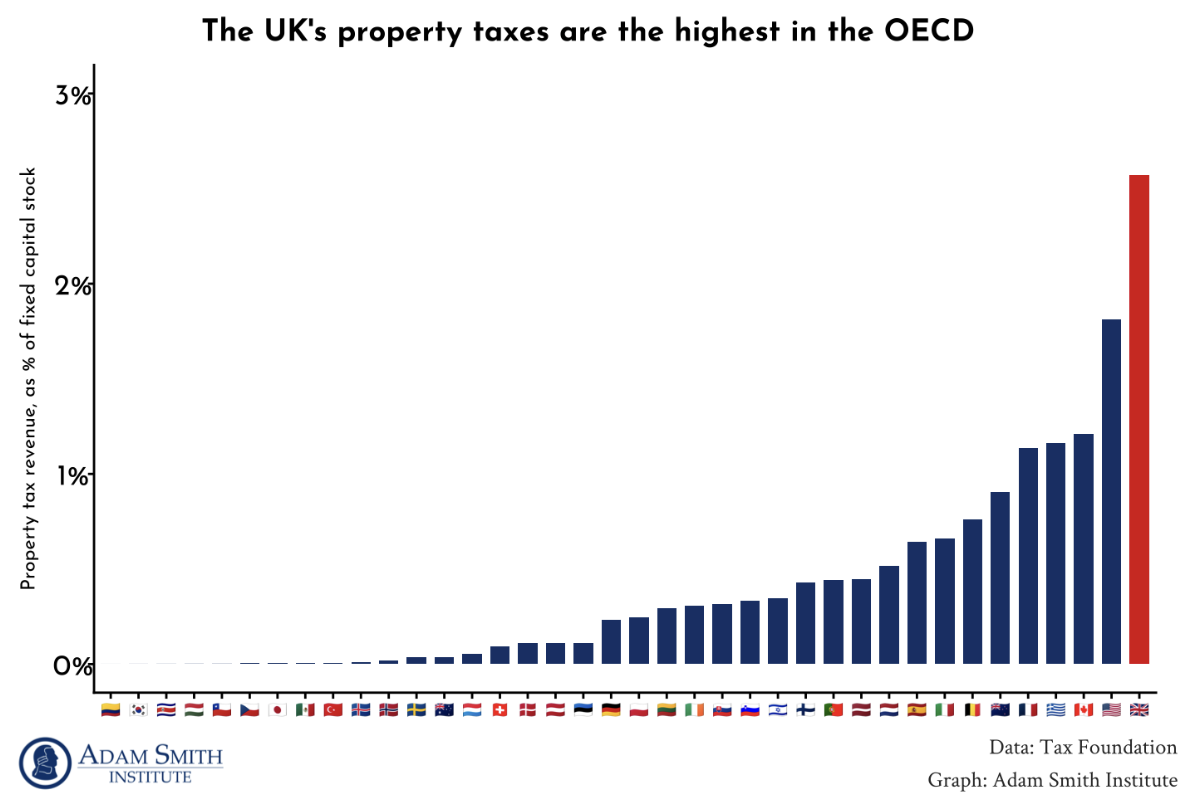
The UK's property taxes are the highest in the OECD, standing at 2.6% of the capital stock. That is over six times the OECD average of 0.4%.
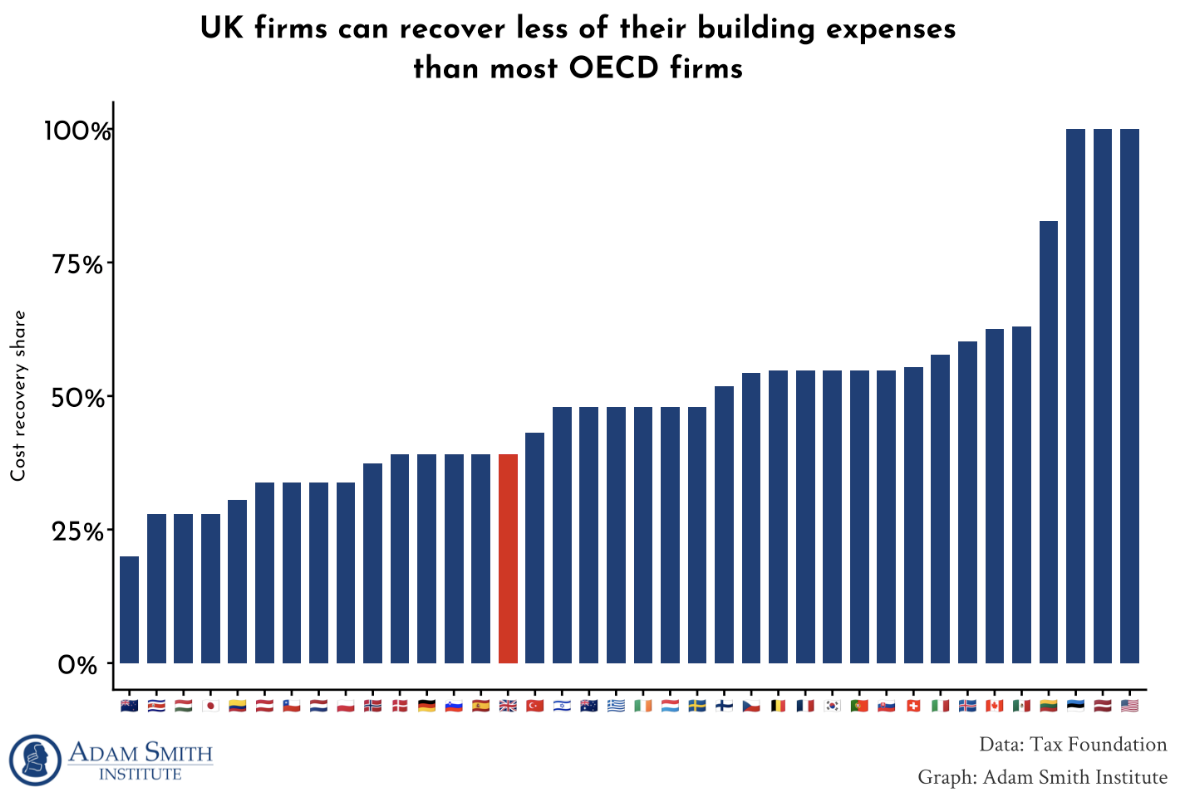
Moreover, capital allowances for new industrial buildings are unfairly stringent. British companies can only write off 39% of the cost against taxes, significantly less than the OECD average of 49%.
These excessive taxes discourage crucial new development, undermining the government's stated plans to back builders, not blockers.
However, as Adam Smith Institute (ASI) analysis of the latest International Tax Competitiveness Index shows, it is not just property taxes that are a problem.
Since 2010, Britain has suffered from the second-lowest average rate of gross fixed capital formation - investment as a share of GDP - in the OECD.
This persistently low investment - worse than expected given Britain's corporate tax rates - is primarily caused by our dysfunctional planning system, which makes physical investment uncertain and costly.
So, the UK tax regime is reducing new development, while our restrictive planning system is undermining the more attractive elements of our tax system.
To get Britain building, we need to abolish stamp duty land tax, reform council tax and business rates, as well as engage in comprehensive planning reform.
The Tax Foundation’s latest International Tax Competitiveness Index reveals that Britain’s tax system is holding us back. Overall, UK’s taxes ranks 32nd out of 38 OECD countries for competitiveness.
While taxes on consumption and company profits are uncompetitive, ranking 33rd and 28th respectively, Britain’s tax system is especially tough on those who build. The UK’s taxes on property rank 37th out of 38 OECD countries.
The UK’s property taxes, measured as a share of the capital stock, are the highest in the OECD at 2.6%. The average is 0.4%. Because these taxes are levied on the value of both land and improvements, they are effectively an additional tax on construction.
Similarly, British companies can only write off 39% of the cost of new industrial buildings from their taxes. This compares to 100% in the United States, Estonia, and Latvia and the OECD average of 49%. This makes new construction much less attractive in Britain and contributes to the overall underperformance of British corporation tax by distorting decision-making. The UK is also an international outlier for not allowing any capital allowances for new residential buildings in corporate ownership.
Naturally, tax is not the only thing blocking builders in Britain. Since 2010, Britain’s average rate of gross fixed capital formation (i.e., investment as a share of GDP) has been the second-lowest in the OECD. This is even lower than one would predict based on the competitiveness of Britain’s corporate taxes.
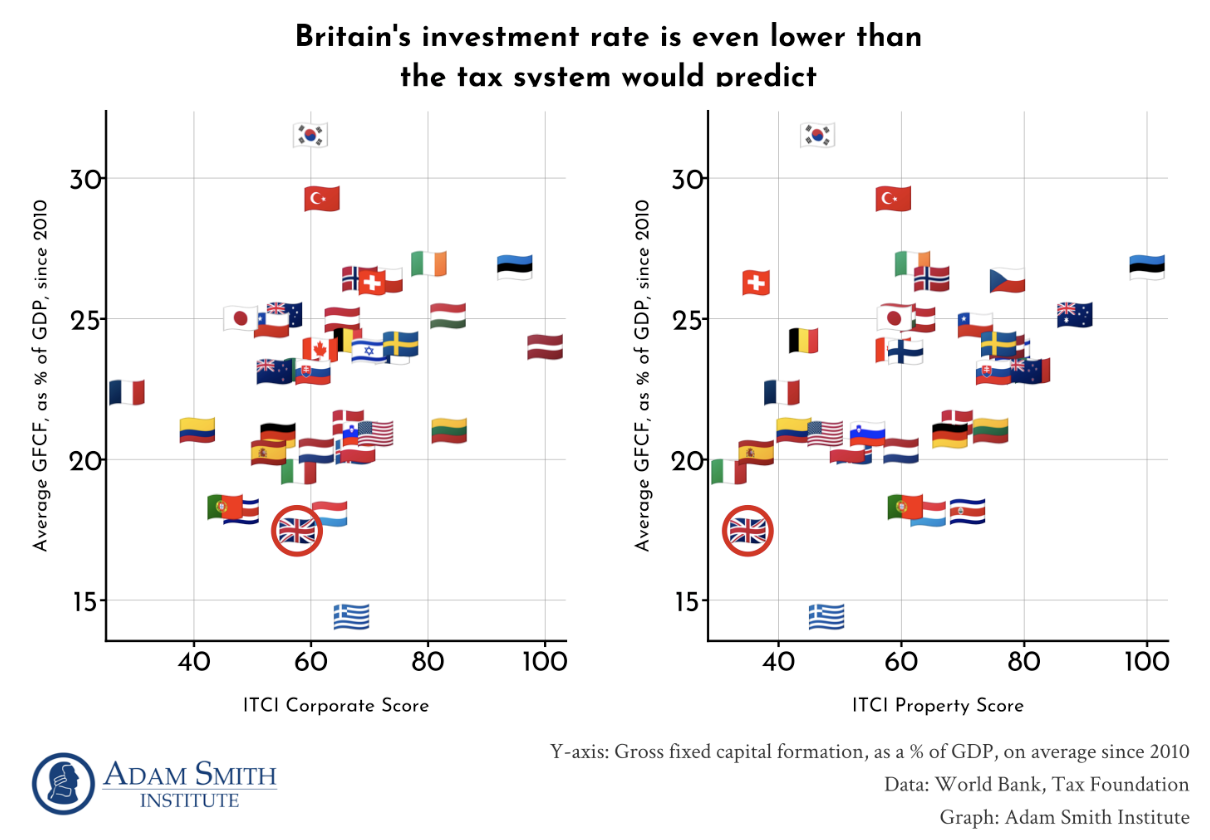
The obvious culprit is Britain’s broken planning system, which makes physical investment much more uncertain and expensive by requiring case-by-case decision-making for planning permissions. But poorly designed taxes exacerbate these problems.
The upcoming Budget gives Rachel Reeves a chance to unlock a building boom. While planning reform is essential, changes to our tax regime would also encourage new development. To do this, she could:
Abolish stamp duty land tax.
Improve the generosity of investment allowances for new buildings.
Rebalance council tax and business rates so the burden largely falls on the unimproved value of land.
Sir Mel Stride, Shadow Chancellor of the Exchequer, said:
"We need a tax system that maximises growth and productivity. Under the current government, not only are taxes too high, but we are taxing the wrong things. Stamp Duty is a terrible tax, but people wanting to get onto the property ladder or move house are paying even more this year than last. Abolishing Stamp Duty on main homes would free up our housing market and create a stronger, more competitive economy."
Andrew Dauber, Founding Partner of Civitas Investment Management & Senior Fellow at the Adam Smith Institute, said:
"It has never been more difficult or expensive to build in the UK. A perfect storm of high corporate and property taxes, ever increasing, complex regulation and a planning system that is often overwhelmed results in extended development timescales, reduced financial viability and a strong sense that the system itself is conspiring to prevent rather than encourage growth.
If we are serious about pursuing a growth agenda, we must recreate the conditions and can-do attitudes that in the past saw us as the envy of the world in delivering world class buildings and national infrastructure. The proposals in this paper represent a significant start in that direction."
Alex Mengden, Global Tax Policy Analyst at the Tax Foundation, said:
“Stamp duty land tax is a tax that belongs in the 17th century. It severely distorts the allocation of property and raises the cost of capital for building, while raising little revenue.”
“The UK's restrictive capital allowances add further to the high cost of capital for building projects, allowing businesses to write off just 39% of investment costs for commercial buildings in real terms compared to a 49% OECD average, and nothing at all for residential construction, making the UK an international outlier. As the Adam Smith Institute’s report highlights, these distortive taxes layer on top of an already restrictive planning system.”
ENDS
Notes to editors:
The Tax Foundation’s International Tax Competitiveness Index is an annual ranking of the relative performance of the tax systems of all 38 OECD member countries. The Tax Foundation has produced the ranking since 2014.
Vector versions of the graphs are available on request.
For any further details on the methodology, or to arrange an interview, please contact press@adamsmith.org / +44 7584778207