
Pipe Dreams: The Case for Building Reservoirs Again
Harriet Dolby - August 2026
Introduction
In 2011, the White Horse Reservoir was rejected by the Secretary of State for Environment, Food and Rural Affairs, on the grounds that there was ‘no immediate need’ for it. This would-have-been reservoir is located just seven miles away from Culham (Oxfordshire), now the UK’s designated pilot AI Growth Zone, and one of the most water stressed regions in the country.
This case is not unique. In fact since 1992, no new reservoirs have been built in the UK, with reasons ranging from environmental regulations to simply a lack of demand. Yet as of July 2026, eight temporary use bans were in force across England, hitting more than 20 million people across Thames Water and South East Water alone. What we therefore clearly need is an increase in supply. Constraining demand can only go so far.
These water shortages aren’t simply an inconvenience though. They are holding back our growth. By 2055 it is projected that the UK will have a water supply deficit of 5 billion litres per day, and a further 1 billion litres per day for energy generation, food production and emerging technologies. It is estimated that a lack of available water resources is constraining house building in particular, as Water UK announced that England only has enough water to support 420,000 new homes, over 1 million short of the Government’s target for this Parliament.
The first section of this deep dive will explore some case studies of how reservoirs have been blocked and the subsequent impact on growth and development in their respective regions. Following a brief discussion evaluating the impact of AI on water demands, the deep dive will then look into the process of building a reservoir and the evolution of legislation making this far more difficult. Lastly, there are three proposals on how we can begin to tackle this problem. Deregulation is clearly the way.
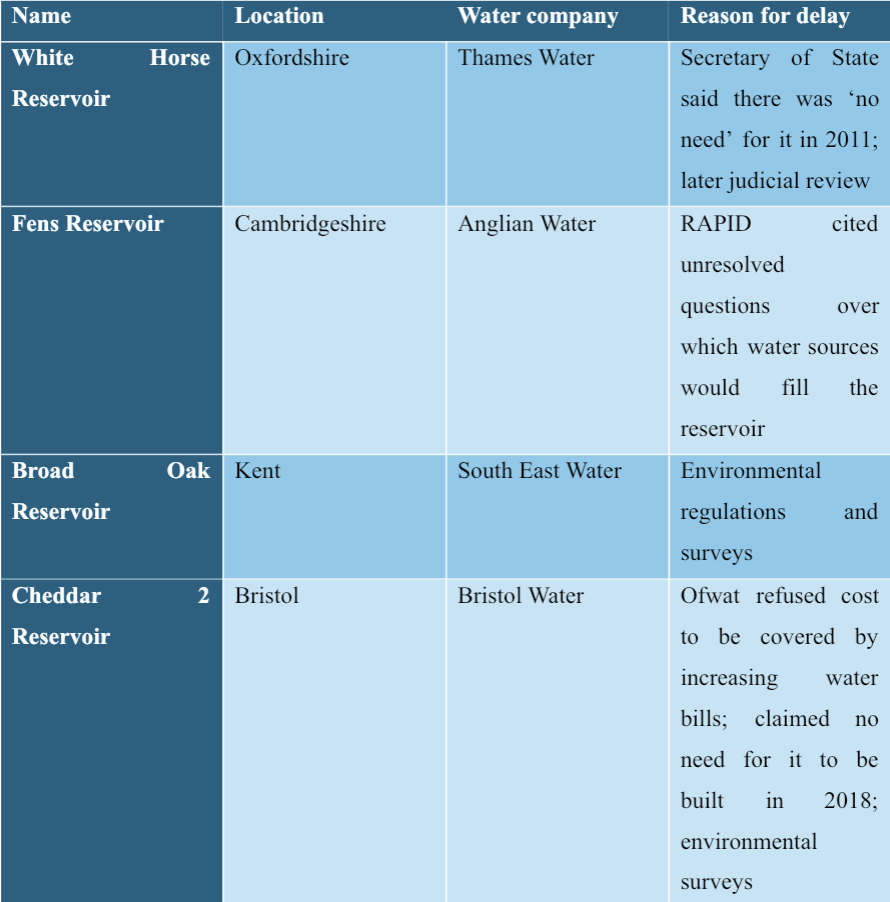
Figure 1: Reasons reservoirs have been rejected or delayed
Thirty Years Without a New Reservoir
Europe’s ‘Silicon Valley’: Cambridgeshire
Cambridgeshire is a case study in how water scarcity can limit growth. Despite Rachel Reeves’s plan for Cambridge to become the ‘Silicon Valley of Europe’, the Environment Agency objected to a 4,500 home development nearby, in Waterbeach, due to a lack of water. Likewise the Environment Agency objected to plans for a Cancer Research Hospital on the Cambridge Biomedical Campus, as it would ‘give rise to potential harm to waterbodies’ due to the additional demands placed on the potable water supply. Despite this objection though, the hospital was finally approved by local councillors on both the city and South Cambridgeshire councils.
This scenario is rather paradoxical as prior to the Great Draining in the 17th century, much of the Fenlands were submerged under water, were uninhabitable, and transport was conducted by boats and stilts. The process of draining the fens continued for the following three centuries, yet winter flooding continues to damage properties across East Anglia. Thus, despite this flooding, and the fact that 20% of East Anglia lies below mean sea level, it remains an incredibly water scarce area. It is clear then that if more of this floodwater could be contained within reservoirs it could aid with the extreme seasonality of water provision in the region.
Yet, the Fens Reservoir, proposed in 2019, continues to face delays over 7 years later. RAPID (Regulators’ Alliance for Progressing Infrastructure Development) still has concerns over how the reservoir would be filled and how it aligns with WRMPs. This predicament comes about as the reservoir cannot be filled from the chalk streams (due to environmental concerns); any abstraction requires its own licence and its own Habitats Regulations Assessment; and the surface water in the region is highly regulated by Internal Drainage Boards and pumped for land drainage.
Across Cambridgeshire, water stress has caused significant delay to housebuilding, with the building of 9,000 homes being postponed, including 3,000 homes on a former Airfield and 300,000 squared meters of commercial development. To make matters worse, the housing developers of Bourne Airfield had already dedicated £115 million to local health facilities, schools and transport links. So, despite jumping through all of the regulatory hoops, the provision of the basic resource, water, can stall this by several years, driving up costs. How can we be expected to create a competitive and appealing place to live for scientists and entrepreneurs if it takes so long to decide if there is enough water? The reasons why we have such a slow system will be explored further later in this deep dive when we look into the legislative development of the water sector, and the great regulatory burdens placed upon them too.
At a Snail’s Pace – South England’s environmental requirements
Further south, in Sussex, the trend continues. Limited large- scale infrastructure projects result in continued water shortages, as Sussex’s last major reservoir was completed in 1979.
Indeed, in 2021 Natural England issued a four-year-long Water Neutrality Position Statement for Sussex North Water Supply Zone, which includes Horsham District Council, Crawley Borough Council, parts of Chichester District Council, the South Downs National Park and West Sussex County Council. This statement effectively created a four-year moratorium on housing consent across these districts, as groundwater abstraction had to be shown not to be harming the RAMSAR site, home to the protected lesser whirlpool ramshorn snail. In 2025, whilst the water neutrality statement had been withdrawn by Natural England, the Water Delivery Taskforce (made up of DEFRAefra, Natural England, Environment Agency, Southern Water) agreed a new package of requirements for Southern Water. Under it, Southern Water agreed to a cap on its abstraction licence and to fund Arun Valley habitat restoration at no cost to consumers, while new homes are to be built to higher water-efficiency standards. Thus, whilst this didn’t directly affect the building of reservoirs, this case study demonstrates how environmental protections, and water scarcity combine to affect further developments, and create irresolvable blockages.
Whilst the lesser whirlpool ramshorn snail may be protected, it must be recognised that reservoirs are brilliant for biodiversity at scale. Indeed, Grafham Water in Cambridgeshire is home to 170 species of birds, including rare species like the Kelp and Caspian Gull, and Surf Scoter. Moreover, reservoirs, including Grafham, are designated as Sites of Special Scientific Interest enabling greater research into natural habitats. Therefore, surely these excessive environmental assessments and the overly-zealous quangos prove unnecessarily costly as there can be significant biodiversity improvements organically through the creation of reservoirs.
No Immediate Need : South East England
Over in Oxfordshire, the Environment Agency has assessed that it is one of the most water stressed in the country, a situation which is likely to limit the AI Growth Zone’s capabilities. Culham is already home to the UK Atomic Energy Agency, and so research there will include looking into how fusion energy can power AI ambitions. This zone will aim to boost data centre infrastructure and accelerate regional innovation in supercomputing, with CloudHQ recently confirming their plans that they are planning to build a new £1.9bn data centre campus in Didcot, on the site of a former power station. It is estimated though that if the Government prioritise delivering this AI capacity prior to the water investment, the water scarcity challenge could act as a barrier to £1.3 billion of economic growth from other sectors, as further construction projects to facilitate new businesses and further manufacturing would be rejected.
Such a dilemma was entirely avoidable. In the 1990s, the idea of having a reservoir on the Oxfordshire site was first floated. In 2010, it was opposed by GARD (Group Against Reservoir Development), CPRE (Campaign to Protect Rural England) Oxfordshire, Cotswold Canal Trust, and the Environment Agency. Due to these objections, and the unwillingness of the Environment Secretary, Caroline Spelman, to approve it either, the project’s progress was paused. In 2018, the scheme was revived with a slightly larger site proposal; in 2024 the Secretary of State approved it; and the following year it was designated an NSIP (Nationally Significant Infrastructure Project). This NSIP status means that planning consent needs to be given by the government rather than the local planning authority.
As such in June 2024 a judicial review was brought by CPRE Oxfordshire and GARD, challenging Steve Reed’s approval of the WRMP (Water Resource Management Plan) and the refusal to hold a fresh public inquiry into the proposals for the reservoir. TFortunately, this claim was dismissed, and the permission to appeal was refused by the judge. After a further 11-week statutory consultation earlier this year, it is expected that the DCO (Development Consent Order) application will be submitted this autumn. On an optimistic timetable the reservoir will be completed by 2040. Delay has already tripled the reported capital cost from £2.2 billion in 2010 to £6.6 billion. The delays caused by a lack of future-planning, objections from local groups and environmental concerns all resulted in an incredibly costly process, and a continued water supply challenge for over a decade, which is likely to further limit housing developments and AI infrastructure too.
As with the White Horse Reservoir, environmental legislation continues to add cost and delay for the Broad Oak Reservoir, near Canterbury. Indeed, both of them face steep biodiversity net gain requirements, with the White Horse needing to acquire further land of 38km squared, partly for biodiversity net gain and flood mitigation, far higher than the reservoir footprint of around 6.7km squared. Meanwhile, for the Broad Oak Reservoir, South East Water states an obligation to fulfil biodiversity net gain targets, and is working with Kent Wildlife Trust, Historic England, Natural England and the Environment Agency to achieve this; giving greater power to quangos and increasing the cost through further consultations. These assessments place a significant burden upon South East Water in the Broad Oak project, as surveys began in 2024, and will continue until 2028, prior to a planning application even being submitted.
Broad Oak’s assessments include bird surveys which can require a full year of observation; and also included an assessment of ‘the heritage of any building’, with Historic England among the partner agencies; whilst archaeological assessments cost on average £11,000 (adjusted for inflation from 2012 prices). Indeed, these expensive and time-consuming archaeological assessments are thought to affect up to one third of clay-lined reservoirs (often large agricultural irrigation projects), demonstrating that whilst each survey may individually be defensible, with all of the surveys and obligations required the cost burden is incredibly detrimental and can act as a deterrent.
Refused on Cost, Revived at Seven Times the Price : South West England
Cheddar 2 Reservoir also faced these ludicrous processes, which should be operational by 2035. Over a decade ago, in 2013, Bristol Water submitted a planning application for a 9,400 Ml reservoir beside the existing Cheddar reservoir, planning for it to be operational by 2025. The following year, in 2014, Sedgemoor District Council granted planning permission for the project, yet just a month later, Ofwat refused to allow financial recovery from customer bills, citing ‘significant concerns’ over customer interest. The scheme would have added up to just £7/year to bills from 2025.
Unsurprisingly, in 2018, Bristol Water dropped the scheme claiming it was unnecessary. It was only in 2025, the very year it was supposed to be completed, that the project was revived as one of the nine government-backed reservoirs, recognised as strategically important and is now scheduled to begin construction in 2029. As a result of these significant delays, and multiple rounds of planning permission and consultation, Water UK estimates that the cost of this project will be about seven times what it would have cost had construction begun in 2014 (£114 million compared to £839 million on approval in 2025).
Additionally, the Conservation of Habitats and Species Regulations 2017 (Regulation 63) created additional costs and delays on this project. This requires that a competent authority must carry out an appropriate assessment before agreeing to a plan or project likely to have a significant effect on a respective site. Thus, consent may only be granted if the authority can prove that the plan or project will not adversely affect the integrity of the site. As the proposed site for the Cheddar 2 Reservoir sits directly within a flight path for greater and lesser horseshoe bats, the HRA requires intensive night-time acoustic tracking over multiple seasons to ensure the habitats aren’t adversely affected. Additionally, as Cheddar 2 is designed to abstract surplus water from the Cheddar Yeo River and the River Axe, the HRA must determine how this will affect the downstream wetland ecosystems of the Somerset Levels and Moors SPA/RAMSAR site, home to protected aquatic life and waterbirds. There are no published figures for total spend, but individual survey costs are indicative; great crested newt surveys run to £3,500 for up to six ponds, and bat activity surveys to £2,500 for a single transect across three visits.
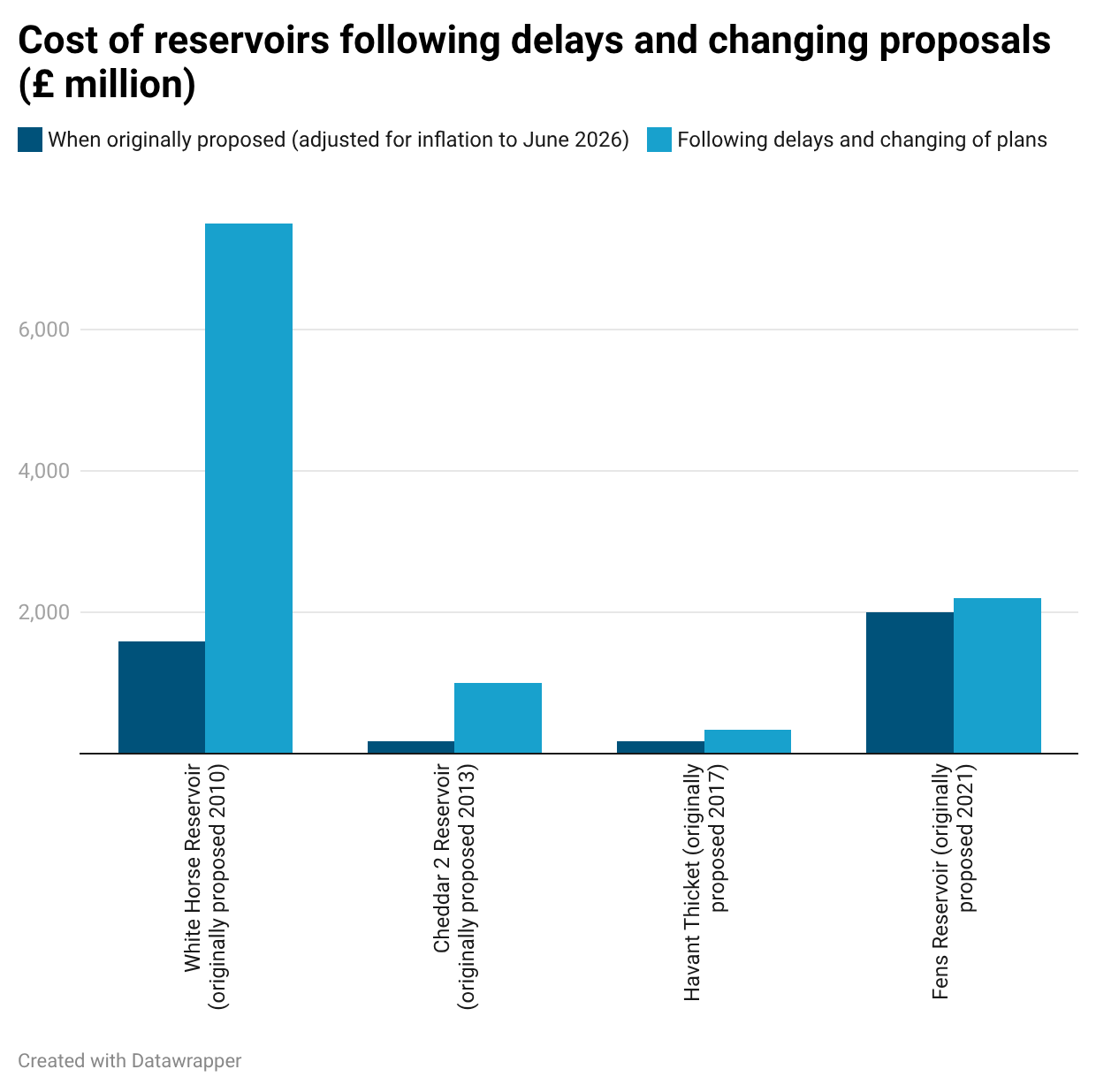
Figure 2: A graph to show the increase in cost of building reservoirs following delays and changing proposals (£ million)
Do Data Centres Actually Drink That Much?
Water consumption is not simply increasing due to population growth. AI plays a role too. According to the Data Centre Map, there are 509 data centres as of March 2026, with more than three quarters of those being in the water-stressed East and South East of England, driven by proximity to financial centres. This Government has made it clear that they wish to prioritise AI and data centres, designating such sites as Critical National Infrastructure in September 2024, alongside energy and water. Furthermore, the Government aims to treble capacity by 2030, which would increase water usage to 19.8 million litres per day, equivalent to the water used by 60,000 homes, 0.42% of the total water supply to the country. Admittedly, this is rather low, and according to an Environment Agency survey in August 2025, of the data sites surveyed, 51% use waterless cooling, and 64% use under 10,000 cubic meters of water per year, which is less than the typical leisure centre. So, whilst the actual water usage by data centres is relatively low, it remains important to factor them in into local water resource management plans, which is currently not the case and can cause additional strain in certain regions, as will be discussed later. It is also important to note that data centres’ water usage varies significantly day-to-day, as the peak demand on hot summer days can be more than eight times the annual average, placing more pressure when water levels are likely to be low. Moreover, the water usage is vastly different between data centres, with the top six sites accounting for 65% of the sector’s water consumption, which concentrates the planning challenge in a handful of locations.
How Do You Build a Reservoir?
In 2025 the Government committed to fast-track the delivery of nine new reservoirs, and as such granted them NSIP status. NSIPs are large scale projects that fall into five general categories- energy, transport, water, wastewater and waste. For these projects, instead of applying to a local authority for planning permission, the developer must apply to the planning inspectorate for a different permission called a Development Consent Order (DCO). A Development Consent Order is a legal instrument to grant planning permission and related statutory powers for NSOPs, combining development consent with compulsory purchase powers and other specific consents. The developer is responsible for setting the timetable and consultation process for this project, and as such the local authorities do not make a final decision on the proposal but are closely involved in the decision making and examination process.
To gain approval for an NSIP there is a six-step process to go through:
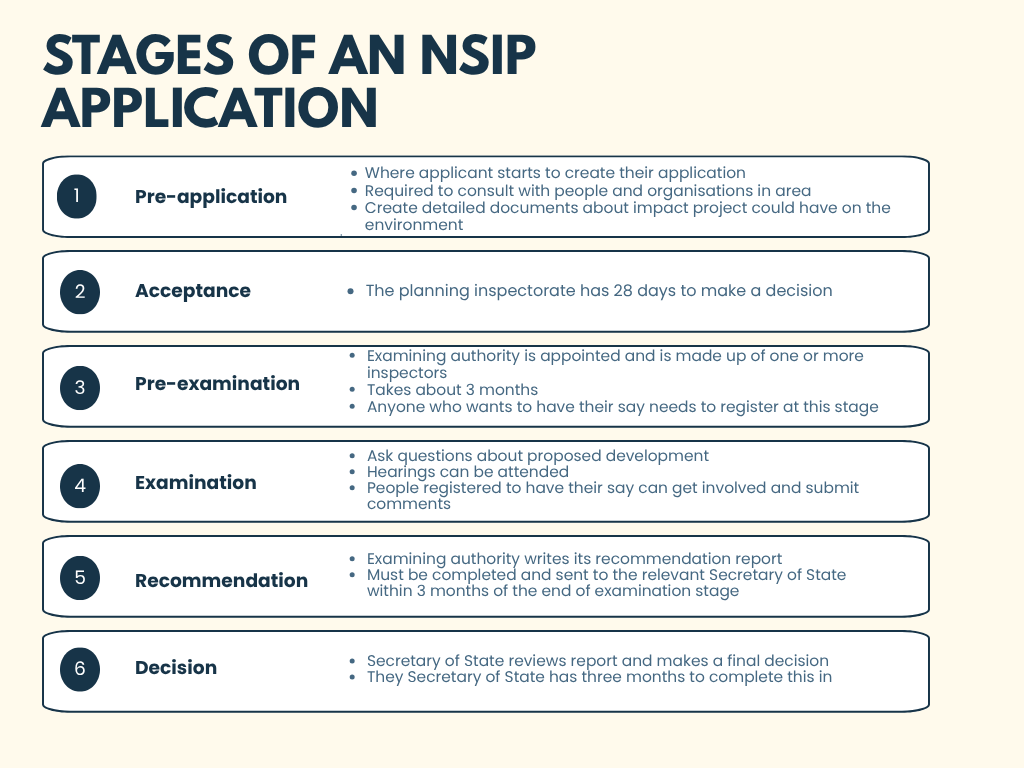
Figure 3: The stages of gaining NSIP status.
Once the decision has been made, and approval for the NSIP has been granted by the Secretary of State, challenges can be made to the high court, which will decide if there are grounds for judicial review.
The Legal Picture
In 1989, Thatcher announced that the Water Act was ‘the key to even higher standards of drinking water quality, and cleaner rivers and bathing waters’. This act privatised the ten regional water authorities of England and Wales, creating the private water and sewerage companies, and establishing the National Rivers Authority.
The Water Industry Act 1991 consolidated the 1989 Act, and reinforced the requirements for the private water companies. Most notably, the provision in Section 37 created the duty to develop and maintain an efficient and economical system of water supply.
Additionally, Sections 41 and 98 create a legal right enabling property owners, developers, or local authorities to formally require a water or sewerage company to build new water mains or public sewers to serve domestic needs. This requisition requirement includes the expectation that the utility company will complete necessary infrastructure within six months once specific financial and location conditions are satisfied. The duty for water companies to develop an efficient supply system is enshrined in law, one that is forward-looking and strategic.
This long-term planning was made clearer through the Water Act 2003 which created the duty for every water company to produce a Water Resources Management plan. These plans identified whether there was a need to expand supply through building more reservoirs or expanding connections, helping to bring greater clarity to long-term investment projects. This same Act also placed water companies under a duty to prepare and publicise drought plans, under an enforceable duty to further water conservation. Whilst the Water Act 2003 does not regulate the physical construction of reservoirs, it does require new abstraction licences to be time-limited, so reservoir owners must then periodically seek licence renewal. So, for reservoirs with operational lives of 40-60 years, this creates uncertainty as the licence may expire or be renewed with more restrictive conditions, posing questions as to whether the reservoir will be able to operate at its intended capacity throughout its design life.
Over a decade later, the Water Act 2014 was passed, which created a new primary duty to secure the long-term resilience of water supply and sewerage systems, with particular reference to managing the impacts of environmental pressures, population growth and changes in consumer behaviour. However, the Environment Act 2021 completely undermined the viability of such an obligation.
Indeed, the Environment Act 2021 made the very construction of reservoirs incredibly challenging. The biodiversity net gain requirement was added into the Town and Country Planning Act 1990 and involves applying the statutory 10% minimum habitat uplift, maintained for at least 30 years. To meet these rules, developers must submit a Biodiversity Gain Plan before construction begins, so habitats lost through construction must be compensated, and new wetlands, reed beds and wildflower meadows can be made to meet that 10% target. The 2021 Act also introduced Local Nature Recovery Strategies (LNRSs) which encourage developers to align habitat creation with priorities identified in the relevant LNRSs, in order to progress more quickly in a planning process.
On top of this Act, Environment Impact Assessments mandate that measurable biodiversity improvements are needed as well as assessing environmental impacts. Therefore, as part of that reservoir proposal, ecological surveys, habitat assessments, and protected species surveys on animals like bats and great crested newts are required, summing to great costs.
However, the Environment Act 2021 also provides the Secretary of State with powers to establish legally binding long-term environmental targets, as was exercised in 2022. One of the first targets made under these powers is to reduce public water supply demand per capita in England by at least 20% by 2037-38 relative to a 2019-20 baseline. As such the WRMPs must be prepared on the basis that the target will be achieved; this is also reflected in Environment Agency planning guidance too, which requires companies to incorporate government demand-reduction objectives. This decision though reduces the assumed future demand, diminishing the apparent need for new reservoirs and other strategic water resource schemes. Additionally, the Environment Act 2021 also strengthens the regulatory framework governing abstraction licences by allowing environmental regulators greater flexibility to vary or revoke licences where abstraction is causing, or risks causing, environmental deterioration, as was the case with the lesser whirlpool ramshorn snail at the groundwater abstraction site in Hardham.
More recently, the Water (Special Measures) Act 2025 imposed bonus and dividend restrictions for water company executives; strengthened enforcement and criminal liability; and gave automatic penalties. This Act was therefore more focused on conduct and accountability, rather than infrastructure, and as such is unlikely to make a significant impact when it comes to encouraging the building of more reservoirs.
Although the Cunliffe review, the Independent Water Commission, published their report in July 2025, detailing some more radical reform proposals. Ofwat was to be abolished and its functions would be folded into the Environment Agency, Natural England and Drinking Water Inspectorate. Additionally, it suggested that there should be a creation of eight regional water system planning authorities in England, with statutory planning functions, clearer strategic direction from the government and an expanded role for RAPID (Regulators’ Alliance for Progressing Infrastructure Development) in overseeing strategically important projects. WRMPs were also found to be inadequate as they are ‘not currently coordinated enough across government and industry to be effective change makers’, due to WRMPs not including non-public water supply sectors like agriculture, energy generation and industrial processes.
Following the review, earlier this year, Environment Secretary Emma Reynolds sets out her A New Vision for Water White Paper to the House of Commons declaring that she supports the abolition of Ofwat and the creation of a single integrated regulator. This regulator would have a chief engineer leading hands-on infrastructure inspections and a dedicated supervisory team per water company with enhanced enforcement powers. She did not, however endorse, Cunliffe’s call for a National Water Security Strategy, which would detail legally binding national objectives on drought resilience and supply diversity. Most structural changes will not be meaningfully operational until the early 2030s, so water scarcity is likely to continue to inhibit growth. This white paper though is only a statement of interest, and with the recent governmental change, it is unclear when the Water Reform Bill will be introduced to Parliament.
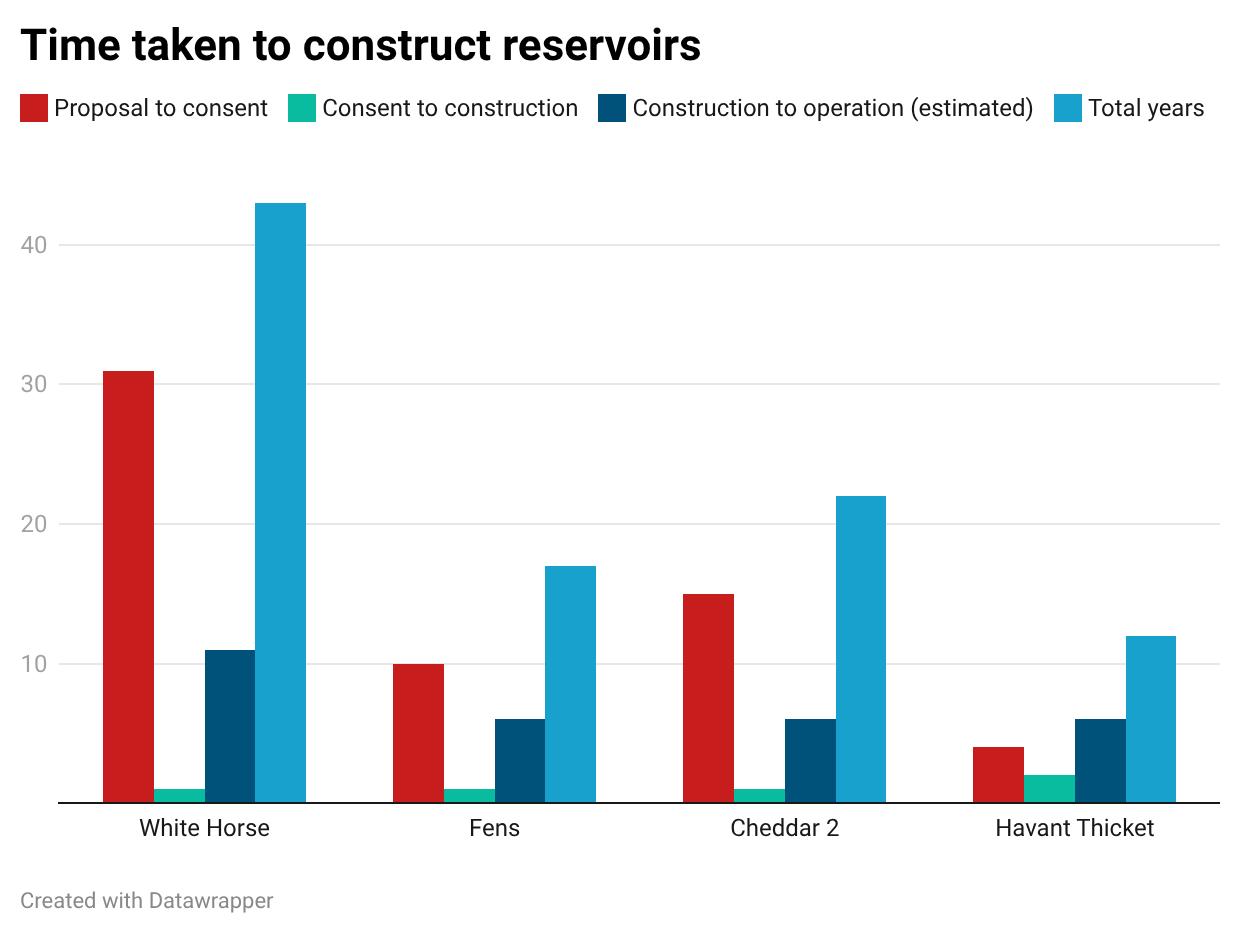
Figure 4: Time taken to construct reservoirs
Can Demand Management Close the Gap?
The Environment Agency’s National Framework for Water Resources (2025) projects a shortfall of 5 billion litres per day for public water supply by 2055, plus a further one billion for other users. In the same year, an Ofwat report detailed that almost two thirds of the deficit will need to be addressed through demand management and leakage reduction. Sir James Bevan’s ‘jaws of death’ speech expressed a similar sentiment at the Waterwise conference, detailing that if individual consumption fell from 140 to 100 litres a day by 2050 and leakage were halved, it would provide enough water for an additional 20 million people without taking any more from the environment. Whilst in response to the Environment Agency’s response that within 25 years London could run out of water, Sadiq Khan stated that his London plan ‘makes clear the need to optimise water usage’ through retrofitting, smart metering, water saving and recycling.
The issue arises as the water savings are massively over-estimated; water companies assume that smart metering reduces demand by around 13%, but this figure is for the transition from unmetered to smart metered households. 75% of the 10 million properties due to receive a smart meter by 2030 already has an analogue meter, where the incremental saving is roughly 3%. Such a policy comes at a great expense too, with Ofwat estimating that new installations of smart meters cost £393 each, and upgrades from analogue to smart meters cost £81 each, summing to £1.7 billion for 10.5 million meters (composed of 2.8 million new installations, and 7.7 million upgrades).
A lot has been done to successfully tackle leakage already though, as leakages have fallen by 43% between 1991 and 2024, and are at the lowest level since records began. There is a regional distinction too as leakage per person is around 40% lower in privately owned water companies in England and Wales rather than their publicly owned counterparts in Scotland and Northern Ireland. Despite these reductions though, it is unlikely much more can be done to limit leakage in a financially sensible way. The Sustainable Economic Level of Leakage (SELL) is the level at which further reduction would cost more than the value of the water saved, including social and environmental costs and benefits. According to the CIWEM (Chartered Institution of Water and Environmental Management), most water companies had already reached their SELL by the mid-2010s, thus any further leakage reduction beyond this point costs bill payers more than the water is worth.
Of course, there is a role that should be played in reducing demand through tackling leakages, but it is clear that current efforts to reduce demand have not done enough. Indeed, according to the Environment Agency, the reduction achieved in distribution input per person was just 3.6% in 2023-4. Although this is somewhat counteracted by the fact that non-household demand has been rising since 2024, against a target of -9% by 2037-38. Concerningly WRMPs assume much lower demand than is actually the case, posing additional challenges to planning and funding future infrastructure like reservoirs, as it is therefore challenging to demonstrate the necessity of such projects.
Proposal 1: Raise the Evidential Threshold for Judicial Review of Water NSIPs
Judicial Review (JR), whilst it does not always stop a reservoir from being built, comes at great cost and delays the necessary construction work. The CPRE Oxfordshire and SAFERWaterS v Secretary of State case challenged the approval of Thames Water’s WRMP24, and the refusal of a fresh public inquiry. This case caused significant uncertainty, and led to roughly thirteen months of programme risk too.
Admittedly, Section 13 of the Planning and Infrastructure Act (2025), implemented in February 2026, streamlines judicial reviews for NSIPs by eliminating the initial paper permission stage, requiring all challenges to National Policy Statements and DCOs to go straight to an oral permission hearing. If the judge at that hearing rules that the claim is totally without merit, the applicant has no right to renew or appeal the decision to the Court of Appeal.
However, the Cunliffe review suggests going further, recommending that legal challenges against large critical infrastructure projects should be minimised, implying the government should go beyond Planning and Infrastructure Act when it came to judicial review. Water UK convincingly suggests that water should be treated the same as energy on judicial review, with the evidence bar being raised so a case is heard only if it is more likely than not to succeed. It is clear that JR cases must be minimised through having a higher legal standard for activist groups objecting to them, or even blocking them entirely once a reservoir has been granted NSIP status. This could be achieved through adding a clause into Section 118 of the Planning Act 2008, which would state that the court may not grant permission to proceed with a claim under this section unless satisfied that the claim is more likely than not to succeed.
Proposal 2: Disapply Biodiversity Net Gain and Habitats Assessment Requirements from Reservoir NSIPs
Environmental regulations also cause significant delays and increases costs, whilst acting as a deterrent to development in the first place. Indeed, Broad Oak is currently undergoing four years’ worth of surveys covering species, habitats and building heritage. Reservoirs, due to their locations near river valleys, fen basins, and floodplains, are likely to be more exposed to regulatory burden with the wider range of species and habitats they are home to.
In recognition of these challenges, the Corry Review made 29 recommendations in April 2025, of which nine are being fast-tracked, which would introduce a single lead regulator for major infrastructure, and a Defra Group Infrastructure Board to monitor at least 50 major projects, rather than having disaggregated responsibilities across different quangos. Corry also highlighted Biodiversity Net Gain as one of the barriers to development.
These biodiversity net gain requirements are incredibly costly, with the White Horse Reservoir facing a 38 squared km biodiverse land requirement against a 6.7 squared km reservoir. Of course, a reservoir creates open water, margins, islands and wetland on what was arable monoculture. Thus, as most reservoirs generate genuine biodiversity value, disproportionate demands should not be placed on water companies to create large spaces for biodiversity. Such environmental requirements are also embedded into the WRMPs too, with the government website detailing that, in England, a WRMP should set out ‘your environmental destination and how it will aid environmental sustainability and resilience’, ‘support nature recovery’, ‘deliver net gain for the environment’, and ‘support delivery of the water demand targets’., with all of these expectations, achieving them in reality is unlikely to occur. Likewise in Wales, a WRMP must include a nature recovery action plan, to show how one has considered the biodiversity and resilience of ecosystems duty.
Wales, though, has even more ludicrous requirements too, with water companies needing to consider the local well-being plan, to improve joint working across all public services, to outline how they will support the public services boards to enhance the economic, social, cultural and environmental well-being of local areas, only driving up cost.
Therefore, with reservoirs granted NSIP status, water companies should not be subjected to these BNG and environmental regulations when building reservoirs. This can be done through removing Schedule 2A from the Planning Act 2008 (introduced by Schedule 15 of the Environment Act 2021), which states that the Secretary of State is barred from granting development consent unless satisfied the development meets the biodiversity gain objective in the relevant biodiversity gain statement.
Proposal 3: Reform Water Resources Management Plans to Account for Total Demand
The WRMPs, as they stand, are not fit for purpose. Companies are now required to assume the Environment Act 2021 demand and leakage targets will be met, including the reduction in public water supply use per head of at least 20% by 2037-38. Additionally, WRMPs cover public water supply only, not agriculture, energy generation, industrial processes or data centres (although recent Government guidance has suggested data centres should be considered in the plans). Thus, it is unsurprising that the Environment Agency’s own National Framework identifies a further 1 billion litres per day needed for non-public-supply uses by 2055. Moreover, the Government’s target of building 1.5 million homes was not included in the current WRMP, and as such water demand estimates are likely to be substantially inaccurate, as is the case actual demand is already 220ML/d higher than WRMPs assume, according to Water UK.
So, whilst reservoirs are rejected on the ground of water demand being too low, houses are being rejected on the basis of water supply being too low. Obviously these two statements cannot be true at the same time, creating a cyclical problem which is easily resolvable through reforming the WRMP to more accurately estimate current and future demand, to enable everyone to be more informed.
WRMPs should be reformed in order to include demands for agriculture, energy generation, industrial processes, and data centres. Whilst revised WRMP guidelines state that WRMPs should now reflect local authority plans’ growth ambitions and plan to support the delivery of housing and other development needs, WRMPs should be revised prior to the five-year deadline if significant housing targets are changed as has been the case with the government’s target of delivering 1.5 million new homes this parliament. Additionally, WRMPs should not assume that the targets for the reduction of public water demand are met, because very few are; as Ofwat’s 2023-24 performance report recording that on per capita consumption, ‘no companies have met their performance commitment level across the 2020-25 period to date’.
Conclusion
Britain faces a paradox: total annual rainfall across the UK has increased in recent decades (by about 8% in the 2016-2025 period compared to the 1961-1990 baseline), yet we are facing more severe water scarcity. These water shortages, at best, manifest in hosepipe bans, and at worst in blocked housing and commercial developments.
This problem is resolvable though; it is an allocation of resources question.
It is clear that we need to build more reservoirs, particularly in water scarce regions, to help alleviate the seasonality of water provision. Yet, as this deep dive project has acknowledged, there are too many barriers in the way.
One large barrier is the lack of accurate information available. WRMPs are supposed to guide the future investment of water companies and identify where large scale projects are needed in order to keep up with their requirement to provide enough water as specified in the Water Industry Act 1991. However, WRMPs do not include the data for the demand generated by industrial processes, agriculture and data centres, and current ones have not included the Government’s housing target of 1.5 million new homes. Thus, it is clear that WRMPs need to be reformed to reflect a more accurate estimate of demand, enabling water companies to justify their large-scale infrastructure projects and plan more appropriately.
Meanwhile additional costs and delays are only ramped up further due to excessive environmental regulations that require numerous surveys, and judicial review cases. These projects carry statutory status as nationally significant; they should be treated accordingly. Maximum efficiency when it comes to spending and time should be prioritised, as these delays are withholding opportunities for our country to grow. Therefore, BNG requirements, and the conduct of environmental surveys should be lifted for these reservoirs, as well as the raising the evidential threshold for levying a JR case with regards to these reservoirs.
Until we stop reducing reservoirs for want of demand and refusing homes for want of supply, we will build neither.